When Everything Went Wrong at Once: The Day Three Disasters Nearly Broke New York City
When Murphy's Law Meets Manhattan
Some days, everything that can go wrong does go wrong. But rarely do those days involve a financial collapse, a two-ton escaped circus animal, and a five-alarm fire all hitting the same neighborhood within the span of six hours. Welcome to April 15, 1902, when lower Manhattan experienced what historians would later call "the most spectacularly disorganized day in New York City history."
It was the kind of convergence that disaster planners have nightmares about – if disaster planners had existed in 1902, which they decidedly did not.
The Morning That Started Normal
The day began like any other Tuesday in Gilded Age New York. Wall Street buzzed with its usual controlled chaos of traders and clerks. The Barnum & Bailey Circus was setting up for another sold-out show at Madison Square Garden. The Brooklyn waterfront hummed with commercial activity as ships unloaded cargo into massive warehouses.
By noon, all three of these routine scenes would spiral into citywide pandemonium.
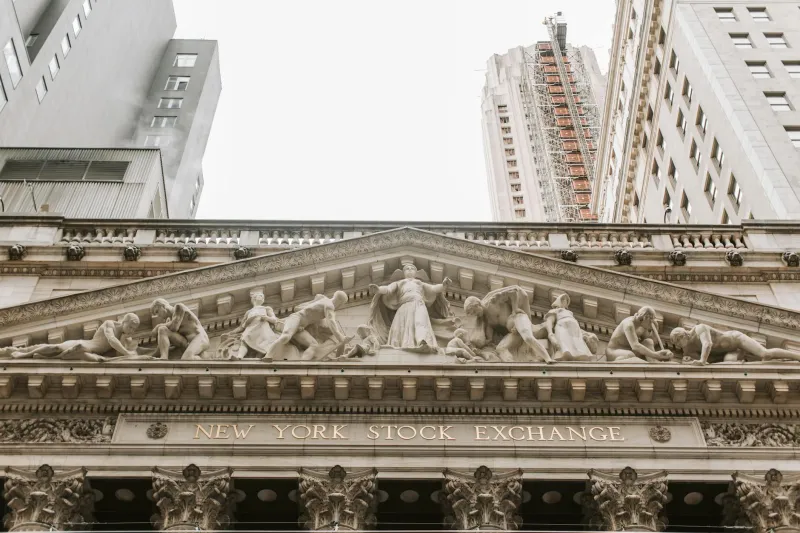
The first domino fell at 9:47 AM, when rumors began circulating on the floor of the New York Stock Exchange that the Northern Pacific Railway was facing bankruptcy. In an era before electronic communication or federal market regulations, stock panics spread like wildfire through word of mouth and frantic telegraph messages.
Wall Street's Very Bad Morning
What started as whispered concerns about railroad bonds quickly escalated into full-blown hysteria. Traders who had never heard of Northern Pacific Railway began dumping stocks based on nothing more than the terrified expressions of their colleagues.
By 10:30 AM, the Exchange floor looked like a scene from a disaster movie. Men in top hats were literally climbing over each other to reach the telegraph office. Fortunes that had taken decades to build were evaporating in minutes. The phrase "sell everything" echoed through the marble halls like a war cry.
Outside, crowds began gathering as news of the financial collapse spread. Horse-drawn carriages clogged the narrow streets around Wall Street as panicked investors rushed to their banks. Police officers, completely unprepared for crowd control on this scale, found themselves overwhelmed by thousands of frantic New Yorkers demanding answers that nobody had.
Meanwhile, Across Town...
As Wall Street descended into financial chaos, the Barnum & Bailey Circus was dealing with its own crisis. Jumbo Jr., a massive African elephant and one of the circus's star attractions, had apparently decided that his morning routine needed some improvisation.
Exactly how Jumbo Jr. escaped from his handlers remains a matter of debate. Some witnesses claimed he was spooked by the unusual noise and commotion drifting over from the financial district. Others insisted he was simply having what modern animal behaviorists would call "a bad elephant day."
What isn't debated is what happened next: two tons of confused pachyderm began a leisurely stroll down Broadway, stopping occasionally to investigate fruit stands, overturn carriages, and generally cause the kind of mayhem that makes headlines.
An Elephant on Broadway
Picture the scene: financial panic has already put the city on edge, police are stretched thin managing crowds of frantic investors, and now there's an elephant wandering through midtown Manhattan like he owns the place.
Jumbo Jr.'s impromptu tour of the city created a cascade of secondary disasters. Horses, already skittish from the unusual crowds and noise, began bolting at the sight and smell of the massive animal. Carriages overturned. Pedestrians fled into shops and restaurants, creating their own mini-stampedes.
The elephant, for his part, seemed remarkably calm about the whole situation. Newspaper accounts describe him stopping to examine a hot dog cart (which he knocked over) and taking a drink from a horse trough (which he destroyed) before continuing his leisurely exploration of urban life.
Meanwhile, circus workers, police officers, and increasingly desperate city officials chased after him with ropes, nets, and absolutely no plan for how to actually stop a determined elephant in the middle of Manhattan.
And Then There Was Fire
As if the universe had decided that New York's morning wasn't quite chaotic enough, the third disaster struck at 11:15 AM. A massive fire erupted in a warehouse complex on the Brooklyn waterfront, sending thick black smoke billowing across the East River and into lower Manhattan.
The warehouse stored everything from textiles to chemicals, creating a toxic smoke cloud that reduced visibility to near zero in some parts of the city. Fire departments, already stretched thin by false alarms triggered by the morning's chaos, found themselves fighting a genuine five-alarm blaze while navigating streets clogged with panicked investors and elephant-fleeing pedestrians.
The Perfect Storm of Urban Chaos
By noon, lower Manhattan had essentially ceased to function as a modern city. The stock market had suspended trading. Major streets were impassable due to overturned carriages, fleeing crowds, and emergency vehicles. The air was thick with smoke that made breathing difficult and visibility nearly impossible.
Telephone lines (still a relatively new technology) were overwhelmed by panicked calls. Telegraph systems couldn't handle the volume of messages. The mayor's office received reports of everything from "financial collapse" to "elephant invasion" to "the city is burning" – all of which were technically accurate.
Police Chief William Devery, a man who had dealt with riots, strikes, and gang warfare, would later admit that nothing in his experience had prepared him for simultaneous financial panic, escaped circus animals, and a major fire. The city simply had no protocols for when everything went wrong at once.
The Resolution
Remarkably, all three crises resolved themselves within hours, though not necessarily through any coordinated effort by city officials.
The Wall Street panic ended when cooler heads realized that Northern Pacific Railway wasn't actually bankrupt – the entire crisis had been triggered by a misunderstood telegram about routine bond refinancing. By 2 PM, trading had resumed, though many investors had lost substantial sums during the morning's hysteria.
Jumbo Jr. was finally cornered in Central Park around 1:30 PM, not through any brilliant capture strategy, but because he had apparently grown tired of his urban adventure and was ready for lunch. Circus workers lured him back with peanuts and hay, ending his brief career as Manhattan's most unusual tourist.
The warehouse fire was contained by 3 PM, though not before destroying several city blocks worth of commercial property. The smoke cleared by evening, revealing a city that looked like it had been through a war.
Lessons in Urban Chaos Management
The events of April 15, 1902, exposed just how unprepared early 20th-century cities were for simultaneous large-scale emergencies. New York had police for crime, fire departments for fires, and financial regulations for markets, but absolutely no system for coordinating responses when multiple disasters struck at once.
The day became a case study in what modern emergency managers call "cascade failure" – when one crisis triggers another, which triggers another, until the entire system breaks down. It would take decades and several more disasters before cities developed the kind of comprehensive emergency management systems we take for granted today.
The Absurdity of Reality
What makes this story truly bizarre isn't just that three unrelated disasters hit the same city on the same day. It's that each crisis made the others worse in completely unpredictable ways. Financial panic created crowds that made elephant-catching impossible. Escaped elephants caused traffic jams that delayed fire response. Warehouse smoke made it harder to see the elephant and added to the general sense that the world was ending.
It was a perfect storm of urban chaos that reads like the plot of a slapstick comedy, except that real people lost real money, real buildings burned down, and a real elephant genuinely terrorized Broadway for several hours.
In the end, April 15, 1902, proved that sometimes reality is stranger than fiction – and considerably more expensive to clean up.