When Democracy Meets Ornithology
Picture this: You're sitting in a stuffy town hall in 1952, listening to elected officials debate the finer points of Municipal Ordinance 847-B, which officially declares your farming community at war with a species of bird. The secretary is taking minutes on typewriter carbon paper, documenting for posterity the exact legal language needed to deputize citizens as anti-bird militia. This isn't fiction—this actually happened in Tulare County, California.
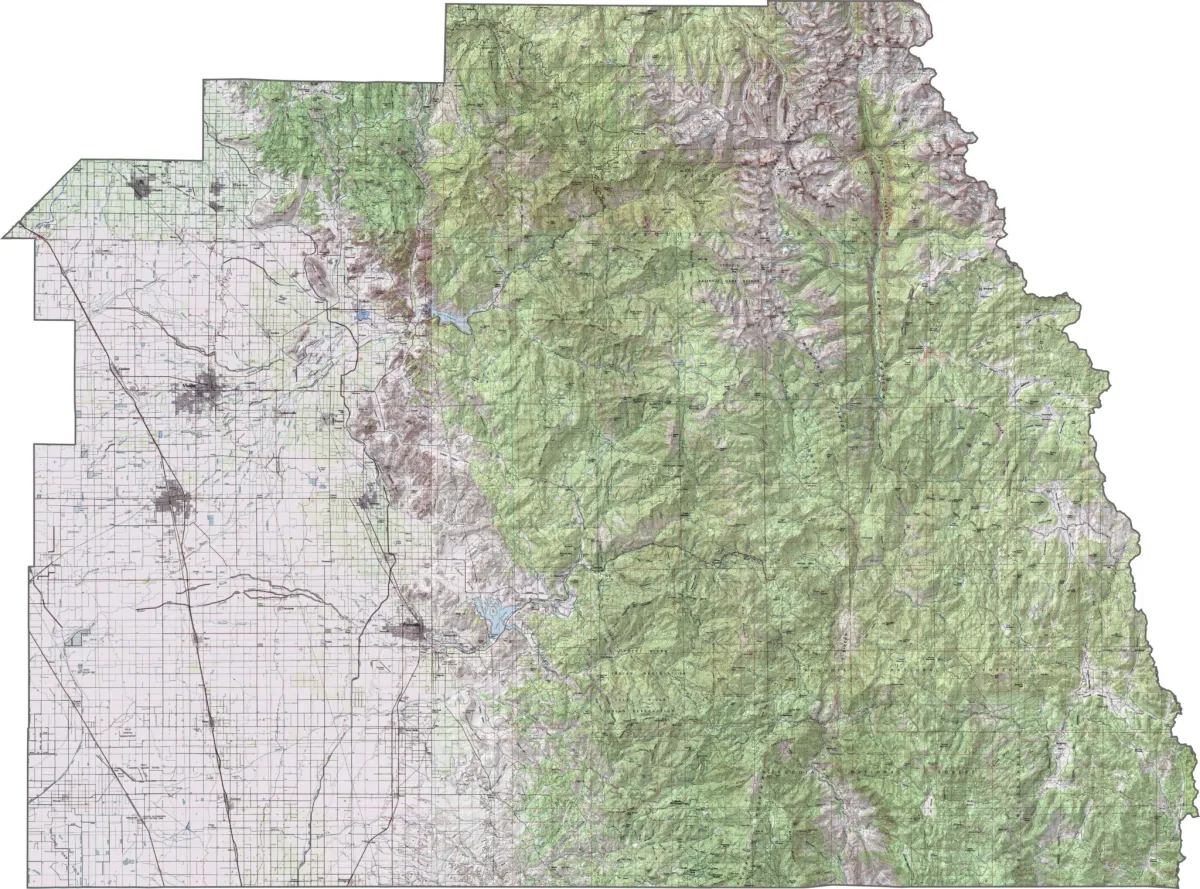 Photo: Tulare County, California, via uscountymaps.com
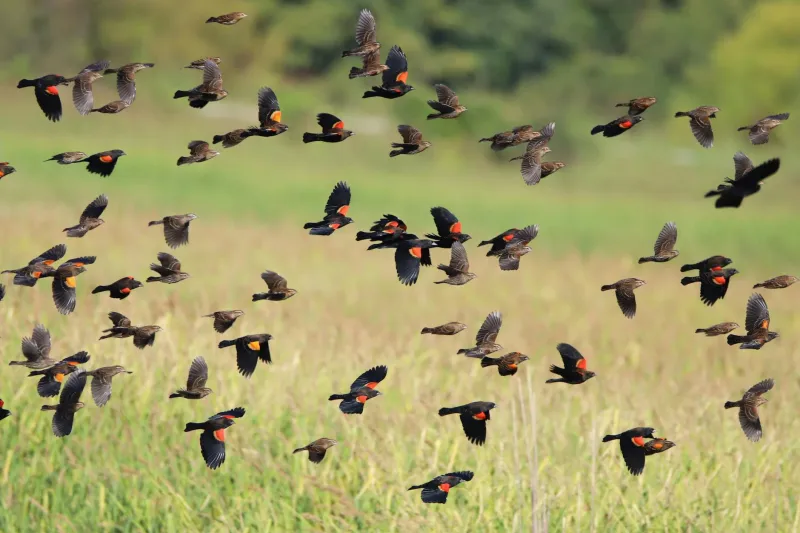
The tricolored blackbird had become public enemy number one. These weren't just any birds causing minor crop damage—massive flocks were descending on rice fields like feathered locusts, destroying entire harvests that families depended on for survival. But instead of calling in agricultural experts or pest control specialists, the town council decided to handle this crisis the American way: with bureaucracy, badges, and an official declaration of war.
The Bureaucratic Battle Plan
The ordinances passed that summer read like something from a satirical novel. Citizens could be sworn in as "Avian Control Deputies" with the legal authority to eliminate tricolored blackbirds on sight. Property owners were required to report nesting sites to the municipal office within 24 hours of discovery. The town even established a bounty system—five cents per bird, payable from the municipal emergency fund.
Local hardware stores started stocking ammunition specifically for the bird war. The Tulare County Gazette ran weekly tallies of confirmed kills alongside weather reports and church announcements. Children collected empty shotgun shells for the bounty program like they might collect baseball cards today.
What nobody anticipated was that the tricolored blackbird had evolved specifically to handle this kind of pressure. These birds don't just reproduce—they multiply with the mathematical precision of a species that's spent millennia dodging predators.
The Ornithologists Tried to Warn Them
Dr. Margaret Chen from UC Davis visited Tulare County three months into their bird war, bringing decades of research on tricolored blackbird behavior. Her message was simple: "You're fighting biology with paperwork, and biology always wins."
 Photo: UC Davis, via pics4.city-data.com
Chen explained that aggressive culling actually triggers accelerated breeding cycles in social bird species. Kill a thousand birds, and the survivors don't mourn—they produce two thousand offspring by next season. The town council listened politely, filed her report under "External Consultation," and voted to increase the bounty to seven cents per bird.
The local newspaper quoted Councilman Robert Hayes: "We appreciate the professor's input, but we've got families losing their livelihoods while she's counting eggs in laboratories. This is a practical problem requiring practical solutions."
When Practical Solutions Become Impractical Problems
By spring 1953, the bird population had tripled. The municipal emergency fund was hemorrhaging money on bounties while crop damage reached record levels. Citizens were spending more on ammunition than they were earning from bounties. The hardware store owner, ironically, was the only person profiting from the war.
That's when things got truly absurd. The town council passed Emergency Ordinance 923, requiring all residents to participate in coordinated "elimination events" every Sunday after church. Picture entire families marching through fields with shotguns, like the world's most depressing Easter egg hunt.
The birds adapted faster than the humans could organize. They shifted their feeding patterns, nested in areas the ordinances couldn't legally touch, and began targeting crops just outside municipal boundaries where the deputies had no jurisdiction.
The Quiet Surrender
By December 1953, the town faced a choice: admit defeat or bankrupt themselves fighting birds that were literally multiplying faster than bullets could eliminate them. The council chose a third option—they quietly repealed every bird-related ordinance without public announcement.
The official minutes from that December meeting contain exactly three sentences about the repeal, buried between discussions about snow removal equipment and library funding. No press release was issued. The Tulare County Gazette never mentioned it. The bounty program simply stopped accepting claims.
Local farmers eventually solved their bird problem the way agricultural communities always had—through crop rotation, strategic planting schedules, and accepting that wildlife was part of the cost of doing business. The tricolored blackbird population stabilized at sustainable levels within two years, exactly as Dr. Chen had predicted.
The Legacy of America's Shortest War
Today, Tulare County's bird war exists mainly in municipal archives and the memories of residents who lived through it. The ordinances were never formally acknowledged as failures, just quietly forgotten like an embarrassing family photo.
But the story reveals something profound about American civic life: our faith that proper paperwork can solve any problem, even when that problem is millions of years of evolutionary adaptation. We're a nation that believes strongly enough in bureaucracy to declare war on wildlife, and optimistic enough to think we might actually win.
The tricolored blackbird, meanwhile, continues thriving throughout California's Central Valley, blissfully unaware that it once defeated an entire municipal government in legal combat.
 Photo: California's Central Valley, via c8.alamy.com