How One Flower Farmer's Lazy Experiment Accidentally Created America's Mushroom Empire
The Accidental Discovery Under a Greenhouse
Sometimes the biggest industries start with the laziest ideas. In 1885, a flower grower in Kennett Square, Pennsylvania, was staring at the wasted space beneath his greenhouse benches and had a thought that would accidentally reshape American agriculture: "What if I just threw some mushrooms down there?"
That throwaway experiment in dead space would eventually turn a sleepy Quaker farming town into the undisputed mushroom capital of America, producing nearly 60% of all mushrooms grown in the United States. And it all started because one guy couldn't stand seeing empty dirt.
The Man Who Couldn't Leave Well Enough Alone
William Swayne wasn't trying to revolutionize agriculture. He was a carnation grower who had built a successful greenhouse operation in southeastern Pennsylvania's Chester County. But Swayne had what you might call an efficiency obsession – he hated seeing any space in his operation go unused.
Looking at the shadowy area under his flower benches, Swayne figured he might as well try growing something there. He'd heard that mushrooms could grow in dark, humid conditions, and his greenhouse floor was certainly that. So he ordered some mushroom spawn, scattered it under his carnation benches, and basically forgot about it.
What happened next surprised everyone, including Swayne himself.
When a Side Hustle Becomes the Main Event
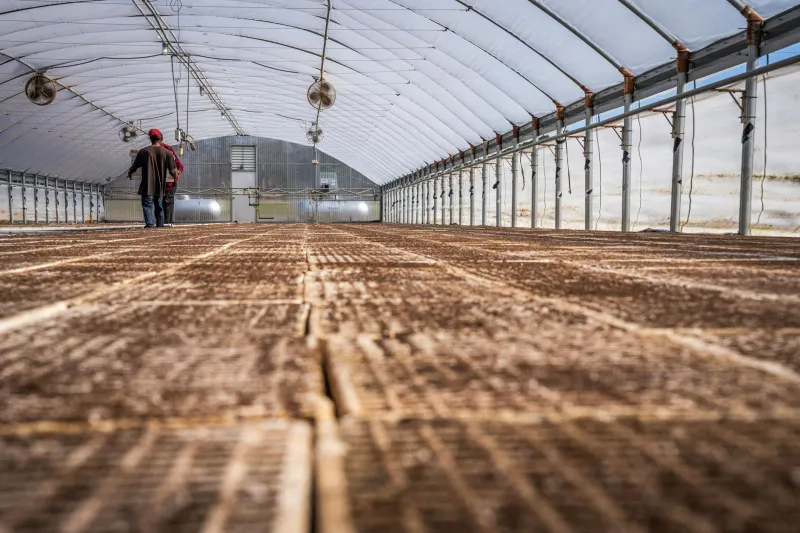
The mushrooms didn't just grow – they thrived. The conditions under Swayne's greenhouse benches turned out to be absolutely perfect for mushroom cultivation. The constant temperature, controlled humidity, and rich soil created an ideal growing environment that produced mushrooms faster and more reliably than anyone expected.
Word spread quickly through the tight-knit farming community around Kennett Square. Other flower growers started experimenting with mushrooms under their own benches. Then farmers who didn't even grow flowers began building structures specifically for mushroom cultivation.
Within a decade, what started as Swayne's space-filling experiment had become Kennett Square's primary industry. Flower growing, the town's original specialty, was rapidly being overshadowed by fungus farming.
The Perfect Storm of Geographic Advantages
Kennett Square's transformation into Mushroom Central wasn't just about one lucky experiment. The town happened to sit in what mushroom growers now call the "Goldilocks Zone" of American agriculture.
The region's climate provided consistent temperatures and humidity levels that mushrooms love. The soil composition was ideal for the composting process that creates mushroom growing medium. And perhaps most importantly, Kennett Square was perfectly positioned between major East Coast cities – close enough to Philadelphia, New York, and Washington D.C. to get fresh mushrooms to market quickly.
But the real game-changer was the area's existing agricultural infrastructure. Chester County already had experienced farmers, established transportation networks, and suppliers who could adapt to serve the growing mushroom industry.
How One Town Cornered an Entire Market
By the 1920s, Kennett Square had achieved something almost unheard of in American agriculture: total market dominance. The town and surrounding area were producing the vast majority of mushrooms consumed in the United States.
This wasn't just about volume – it was about expertise. Generations of farmers had perfected mushroom growing techniques, passing down knowledge about soil preparation, climate control, and harvesting methods. The concentration of mushroom farms created a feedback loop of innovation and improvement that other regions couldn't match.
Local businesses evolved to support the mushroom industry. Equipment manufacturers, soil specialists, and transportation companies all adapted their services specifically for mushroom farming. This created an ecosystem where everything from research to distribution was optimized for fungus production.
The Mushroom Mafia: How Kennett Square Stays on Top
Today, Kennett Square's dominance seems almost absurd. In a country with diverse climates and agricultural regions, how does one small Pennsylvania town continue to produce the majority of America's mushrooms?
The answer is a combination of accumulated expertise, infrastructure advantages, and what economists call "agglomeration effects" – the benefits that come from having an entire industry concentrated in one place.
Modern mushroom farming requires sophisticated climate control, specialized equipment, and precise timing. Kennett Square has built an entire support ecosystem around these needs. When a mushroom farmer in Pennsylvania has a problem, they can call a neighbor who's dealt with the same issue. When they need specialized equipment, there's a local supplier who understands exactly what they need.
Trying to start a competing mushroom operation somewhere else means building all of that infrastructure from scratch, competing against farmers who've been perfecting their techniques for over a century.
The Billion-Dollar Fungus Economy
What started as William Swayne's lazy space-filling experiment is now a billion-dollar industry. Kennett Square and the surrounding area produce over 500 million pounds of mushrooms annually, from basic white button mushrooms to exotic varieties that sell for premium prices.
The town has embraced its fungal fame. Kennett Square calls itself "The Mushroom Capital of the World" and hosts an annual Mushroom Festival that draws thousands of visitors. Local restaurants feature mushroom-centric menus, and the town's main street is lined with mushroom-themed businesses.
The Lesson of the Lazy Farmer
William Swayne's story is a reminder that some of the biggest discoveries come from the smallest decisions. He wasn't trying to create an industry or revolutionize agriculture – he just wanted to use some empty space under his flower benches.
But his willingness to experiment with that "wasted" space, combined with Kennett Square's perfect growing conditions and agricultural infrastructure, created something much bigger than anyone could have predicted.
Today, when you buy mushrooms at your local grocery store, there's a good chance they traveled from a farm within a few miles of where William Swayne first scattered mushroom spawn under his carnation benches. All because one flower farmer couldn't stand seeing good dirt go unused.