When the Pentagon Went Full Lawrence of Arabia
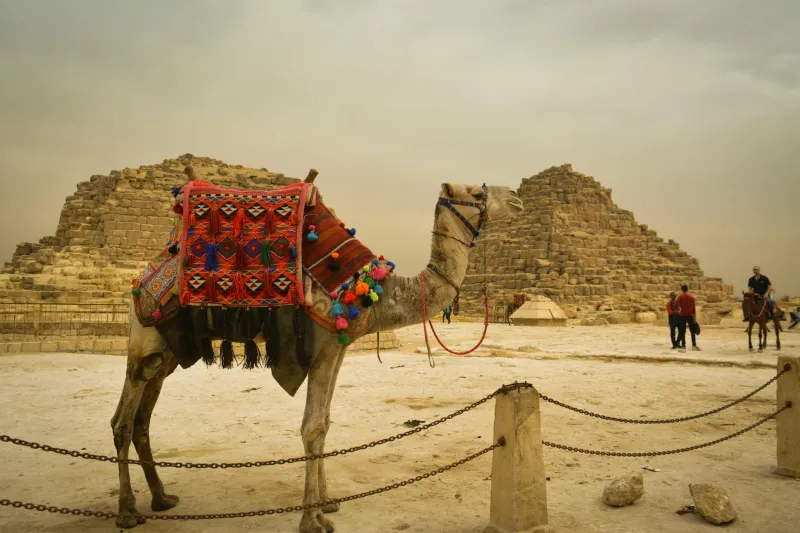
In 1856, the United States Army launched one of the most ambitious and bizarre military experiments in American history: importing dozens of camels from the Middle East to serve as pack animals in the harsh deserts of the Southwest. The idea was actually brilliant—camels could carry heavier loads than mules, required less water, and were perfectly adapted for the terrain where the Army was building forts and surveying railroad routes.
What nobody anticipated was that this logical, well-funded military program would end with wild camels wandering the American frontier for the next 50 years, scaring the hell out of cowboys and becoming the stuff of desert legend.
The Brainchild of a Visionary (Or Lunatic)
The camel experiment was the pet project of Jefferson Davis, who would later become president of the Confederacy but was then serving as Secretary of War under Franklin Pierce. Davis had read reports about camels being used successfully by European armies in Algeria and India, and he became convinced that these "ships of the desert" were exactly what the U.S. Army needed for operations in Texas, New Mexico, and California.
Davis faced considerable skepticism from Congress, where the idea of importing exotic animals for military use struck many as somewhere between innovative and insane. But he was persistent, and in 1855 Congress finally approved $30,000 for the "Camel Military Corps"—roughly $1 million in today's money.
The man chosen to lead this unusual procurement mission was Major Henry Wayne, who was dispatched to the Mediterranean with orders to purchase the finest camels money could buy. Wayne took his assignment seriously, spending months in Egypt, Turkey, and Tunisia, consulting with camel experts and selecting animals based on their size, temperament, and desert endurance.
The Camel Shopping Spree of 1856
Wayne's camel acquisition tour reads like a bizarre travel diary. In Egypt, he negotiated with Bedouin traders who couldn't quite believe that Americans wanted to buy camels for use in a place called "Texas." In Turkey, he hired experienced camel drivers to accompany the animals to America, figuring that importing the expertise along with the camels was probably wise.
The first shipment arrived in Texas in 1856 aboard a specially modified Navy ship that had been converted into a floating camel transport. The sight of 33 camels disembarking at the port of Indianola was reportedly so unusual that it drew crowds from hundreds of miles away. Local newspapers covered the arrival like it was a visiting circus, complete with detailed descriptions of the animals' exotic appearance and mysterious Middle Eastern handlers.
A second shipment in 1857 brought the total to 75 camels, along with several Syrian and Turkish camel drivers who had agreed to stay in America and train U.S. soldiers in the fine art of camel management.
When Everything Went Right (Before Everything Went Wrong)
Contrary to what you might expect from such an unusual military experiment, the Camel Corps was actually a resounding success. The animals proved everything Davis had promised: they could carry 600-pound loads compared to a mule's 200 pounds, they could go for days without water, and they navigated desert terrain with ease.
Edward Beale, the Army surveyor tasked with testing the camels, led them on a grueling expedition from Texas to California, mapping potential railroad routes through some of the most hostile terrain in North America. His reports back to Washington were glowing: the camels outperformed every other pack animal, never complained about the heat, and seemed to thrive in conditions that left horses and mules exhausted.
The camels were so successful that Beale recommended the Army purchase 1,000 more. Plans were drawn up for permanent camel breeding stations, and there was serious discussion about making camel cavalry units a standard part of the American military.
Then the Civil War Ruined Everything
Just as the Camel Corps was proving its worth, the Civil War erupted and completely scrambled military priorities. Jefferson Davis, the program's biggest champion, was suddenly fighting for the Confederacy instead of promoting exotic military innovations. The Army had bigger concerns than camel logistics, and the experimental program was quietly shelved.
Most of the camels ended up at Camp Verde in Texas, where they were essentially forgotten. A few were sold to circuses, others were used sporadically for supply runs, but the grand vision of camel cavalry units patrolling the frontier was officially dead.
Then someone at the War Department made a decision that would create decades of unintended consequences: rather than figure out what to do with 75 surplus camels, they simply released them into the wild and walked away.
The Great Camel Invasion of the American West
What followed was one of the most surreal chapters in frontier history. Suddenly, the American Southwest was home to a growing population of feral camels who had no natural predators and were perfectly adapted to desert survival.
Ranchers across Arizona, New Mexico, and Texas began reporting bizarre encounters with mysterious "desert monsters." Cowboys would round a bend in the trail and suddenly find themselves face-to-face with a seven-foot-tall, hump-backed creature that looked like nothing they'd ever seen. Horses would bolt in terror, cattle would stampede, and more than a few cowboys probably questioned their sobriety.
The situation was made worse by the fact that many of the released camels still wore their military pack saddles, creating an even more bizarre sight as they wandered the desert looking like abandoned Army supply trains come to life.
Decades of Desert Legends
Camel sightings became a regular feature of frontier life. Newspapers ran stories about "ghost camels" appearing near mining camps, and some sightings took on an almost supernatural quality. The most famous was the "Red Ghost," a massive camel reportedly seen across Arizona with what appeared to be a human skeleton tied to its back—possibly a rider who had died and become permanently attached to his mount.
The last confirmed sighting of a feral Army camel was in 1929, nearly 70 years after the program ended. By then, the story had become part of Western folklore, with old-timers swearing they'd encountered mysterious desert creatures that their grandchildren assumed were tall tales.
Some of the camels apparently bred successfully in the wild, creating a brief population of American-born camels who knew nothing of their Middle Eastern heritage. These animals occasionally wandered into towns, causing chaos at markets and terrifying children who had never seen anything like them.
The Legacy of America's Most Successful Failed Experiment
The U.S. Camel Corps remains one of the most fascinating "what if" stories in military history. The program worked exactly as designed—the problem was that history didn't cooperate. If the Civil War hadn't intervened, American military history might have included camel cavalry charges and desert patrol units mounted on dromedaries.
Instead, the program's legacy is a collection of bizarre frontier stories and the reminder that even the most logical military innovations can have completely unexpected consequences. The sight of wild camels wandering the American desert became a perfect metaphor for how quickly ambitious government programs can spin out of control when nobody's paying attention.
Today, a few descendants of the original Camel Corps animals may still survive in private collections and zoos, but their days of terrorizing Arizona ranchers are long over. The experiment that was supposed to revolutionize American military logistics instead became one of the strangest footnotes in the history of the American West—proof that sometimes the most successful programs are the ones that fail in the most entertaining ways possible.