When Reality Glitches
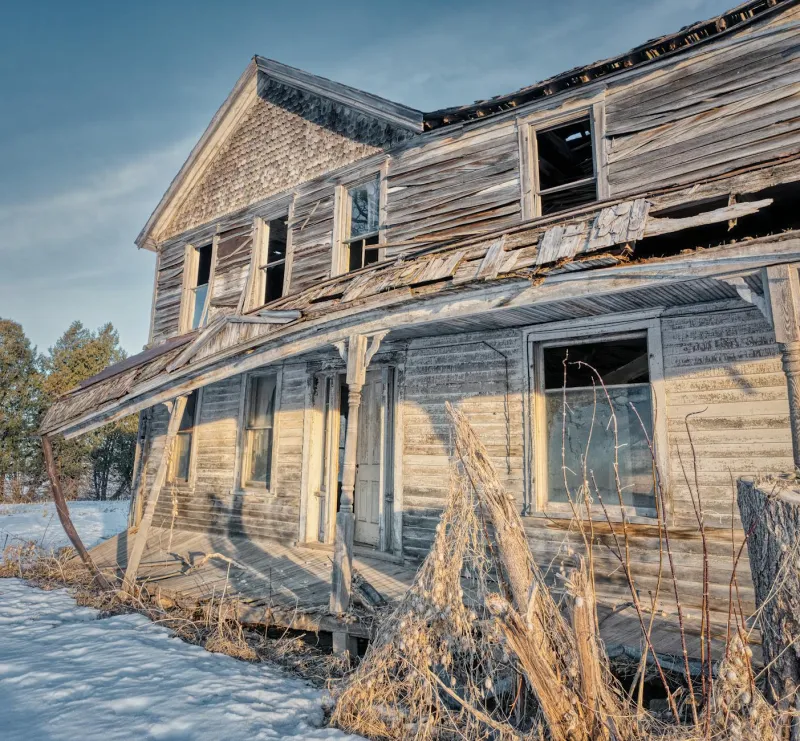
Margaret Chen thought she was just buying a house. The 1890s farmhouse in Peacham, Vermont was perfect — three bedrooms, wraparound porch, and 40 acres of rolling meadows that reminded her of the countryside where she'd grown up. The realtor mentioned the previous owner had been "another Margaret" who'd also lived there for decades, but Chen didn't think much of it.
Then she started finding the journals.
The First Margaret
Margaret Patterson had purchased the same property in 1979, fresh out of nursing school and looking for a quiet place to start her career. She'd grown up on a farm in Ohio, moved to Vermont for a job at the regional hospital, and fallen in love with the idea of rural self-sufficiency.
Patteson kept meticulous journals, documenting everything from garden planning to local weather patterns. When Chen discovered boxes of these journals in the farmhouse's basement, she started reading out of curiosity about the property's history.
What she found made her question reality.
Parallel Lives in the Same Space
Both Margarets were registered nurses who specialized in pediatric care. Both had grown up on family farms in the Midwest before moving to Vermont for work. Both were single women in their late twenties when they bought the house. Both planted identical vegetable gardens in the same corner of the property.
Both adopted rescue dogs within six months of moving in — Patterson got a golden retriever mix named Sam in 1980, while Chen adopted a golden retriever mix named Sammy in 2019.
Both learned to keep bees, built chicken coops in the exact same spot, and started small businesses selling honey and eggs at the local farmers market.
The Impossible Details
As Chen read deeper into Patterson's journals, the coincidences became mathematically absurd. Both women had been born in October (Patterson on the 15th, Chen on the 17th). Both were left-handed. Both played piano and had learned from grandmothers who taught music.
Both had complicated relationships with mothers who wanted them to marry young instead of pursuing careers. Both had younger brothers named David who became engineers.
Most incredibly, both women had moved to Vermont after ending long-term relationships with men named Michael.
The Statistician's Nightmare
When Chen mentioned the coincidences to her neighbor, word eventually reached Dr. Amanda Foster, a statistics professor at the University of Vermont who specializes in probability theory. Foster initially assumed the story was exaggerated — until Chen showed her Patterson's journals.
"I've spent my career studying random events and statistical anomalies," Foster later wrote in a paper about the case. "What happened in that house is mathematically offensive. The probability of two unrelated people sharing this many specific life details and independently choosing the same property decades apart approaches zero."
Foster calculated that the odds of just the basic coincidences — same first name, same profession, same family background, same property choice — were roughly one in 2.8 million. Adding the specific details like pet names, birth dates, and family members pushed the probability into "practically impossible" territory.
The House's Secret History
Digging deeper into property records, Chen discovered something even stranger: the farmhouse had a pattern. Every owner since 1920 had been a single professional woman who'd lived there for 15-20 years before moving away. All had been drawn to the property's isolation and self-sufficiency potential.
The house seemed to attract a specific type of person — independent women seeking rural sanctuary — but the Margaret coincidences went far beyond demographic patterns.
Living Inside a Glitch
Today, Chen still lives in the farmhouse and has embraced its reputation as "the house that repeats itself." She's added her own journals to Patterson's collection and sometimes feels like she's living someone else's life in parallel.
"There are moments when I'm working in the garden or feeding the chickens, and I'll remember reading about Margaret doing the exact same thing in the exact same spot," Chen explains. "It's not spooky — it's more like the house knows what it wants and somehow finds the right person."
Chen has stayed in touch with Patterson, who moved to Oregon in 1999 to care for aging parents. Their phone conversations are surreal — two women comparing notes on living the same life in the same space, separated by decades.
The Psychology of Meaningful Coincidence
Dr. Foster's research into the Margaret case has contributed to emerging studies about "meaningful coincidence" — events that feel significant beyond their statistical probability. Some psychologists theorize that humans are pattern-seeking creatures who notice coincidences that confirm our sense of cosmic order.
But Foster argues that the Peacham farmhouse case transcends psychological explanation: "When coincidences become this specific and numerous, we're looking at something that challenges our understanding of randomness itself."
The Continuing Mystery
Chen has lived in the farmhouse for five years now, following Patterson's timeline almost exactly. She's started wondering what will happen in 2034, when she reaches the 15-year mark where Patterson decided to leave.
"Part of me wants to break the pattern, to prove that I'm not just repeating someone else's story," Chen admits. "But another part of me is curious to see if the house has more surprises planned."
For now, Chen continues Patterson's tradition of detailed journaling, documenting her life for whatever Margaret might come next. Because in a house where reality seems to bend around impossible coincidences, she's learned that some patterns are bigger than individual choice.
The farmhouse still sits on its 40 acres in Peacham, waiting patiently for whatever comes next. And somewhere in Oregon, Margaret Patterson sometimes dreams about a wraparound porch and wonders if another Margaret is living her life all over again.