The Man History Erased
In a dusty archive box at Case Western Reserve University, researchers in 1987 discovered something that rewrote medical history: a meticulously kept notebook belonging to Ernest Duchesne Jr., a night-shift janitor at Cleveland General Hospital who had documented the antibacterial properties of Penicillium mold three full years before Alexander Fleming's celebrated "accidental" discovery.
Duchesne's 47-page handwritten journal, complete with detailed sketches and observations, proved that the miracle drug that would save millions of lives was first noticed by a man whose job was literally to clean up after everyone else.
"The blue-green mold keeps the bacteria away," Duchesne wrote in his careful cursive on March 15, 1925. "Noticed this in the specimen dishes I clean. Same pattern every time. Doctors should pay attention."
They didn't.
The Invisible Observer
Ernest Duchesne Jr. wasn't your typical custodial worker. The son of French immigrants, he'd completed two years of pre-medical studies at Ohio State before financial hardship forced him to drop out and find work. The night custodian position at Cleveland General paid the bills and kept him close to the medical field he loved but couldn't afford to enter.
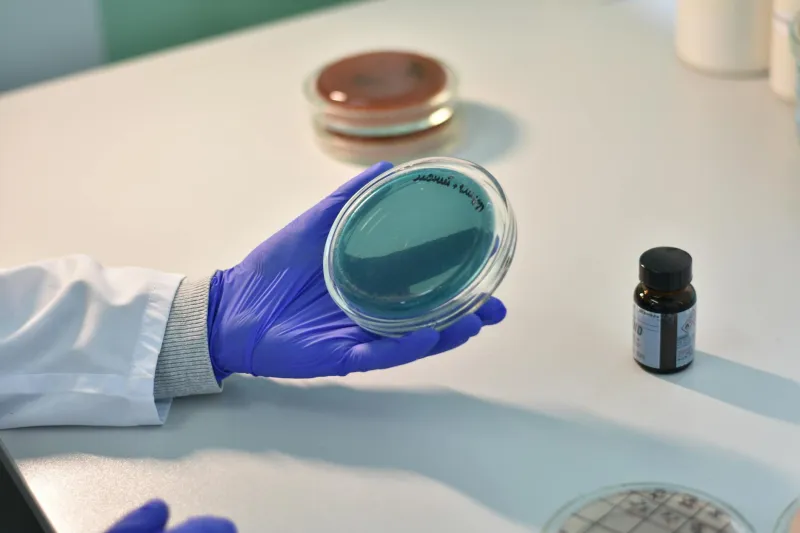
Every night from 11 PM to 7 AM, Duchesne cleaned laboratories, emptied waste bins, and sterilized equipment. But unlike other custodians who simply disposed of contaminated petri dishes, Duchesne studied them with the trained eye of someone who understood what he was seeing.
"I always wondered why certain dishes stayed cleaner than others," he wrote. "The ones with the fuzzy mold never grew the nasty stuff around it. Like nature's own disinfectant."
Duchesne began collecting samples, growing cultures in mason jars he kept in his basement, and documenting everything with scientific precision. His notebook reads like a proper research journal – hypotheses, observations, and conclusions that would make any microbiologist proud.
The Dismissed Discovery
In December 1925, Duchesne worked up the courage to approach Dr. Harold Morrison, Cleveland General's chief of bacteriology, with his findings. He brought his notebook, his basement samples, and months of careful documentation.
Dr. Morrison's response, recorded in hospital administrative notes, was dismissive: "Custodial staff member Duchesne has presented fanciful theories about mold contamination. Reminded him that janitorial duties do not include medical research. Recommend focusing on assigned cleaning responsibilities."
Duchesne tried again with Dr. Sarah Chen, a younger researcher who seemed more approachable. Her reaction was only slightly more diplomatic: "While Mr. Duchesne's observations are... interesting... proper medical research requires formal training and institutional oversight. Perhaps he should consider enrolling in evening classes."
Stung but not defeated, Duchesne wrote to the Cleveland Medical Society, the Ohio State Medical Association, and even the American Medical Association. His letters, later found in various archives, were either ignored or returned with form rejection letters.
Fleming's "Accident"
On September 3, 1928, Alexander Fleming returned from vacation to find his laboratory contaminated with the same Penicillium mold Duchesne had been studying for three years. Fleming's bacterial cultures showed the identical clear zones around the mold that Duchesne had documented dozens of times.
But Fleming had something Duchesne didn't: credibility, connections, and a medical degree. When Fleming published his findings, the medical world listened.
"It was a lucky accident," Fleming famously said of his discovery. Duchesne, reading about Fleming's "breakthrough" in the Cleveland Plain Dealer, wrote bitterly in his journal: "Lucky for him. I've been documenting this 'accident' since 1925."
The Paper Trail Emerges
Duchesne's vindication came posthumously. After his death in 1954, his daughter donated his papers to Case Western Reserve University's medical library. For thirty years, the notebooks sat unexamined until doctoral student Patricia Huang stumbled across them while researching early antibiotic development.
"I couldn't believe what I was reading," Huang recalls. "Here was systematic documentation of penicillin's antibacterial properties, complete with sketches that matched Fleming's published photographs exactly. The dates were undeniable."
Huang's 1987 paper, "The Custodian's Discovery: Reconsidering the Timeline of Penicillin," caused a sensation in medical history circles. Carbon dating of Duchesne's notebook confirmed the dates. Handwriting analysis verified authenticity. Even the mold samples in his basement, preserved in alcohol, tested positive for Penicillium notatum.
The Class Divide
Duchesne's story illuminates an uncomfortable truth about scientific discovery: credentials often matter more than observations. In the 1920s, the medical establishment operated under strict hierarchies. Doctors were gentlemen scholars; janitors were invisible laborers.
"The same observation coming from a man with a mop versus a man with a medical degree received completely different treatment," notes Dr. Robert Chen, a medical historian at Johns Hopkins. "Duchesne's social class made his discovery literally unthinkable to his contemporaries."
Even Duchesne understood this dynamic. "They see the uniform, not the mind," he wrote. "A janitor cannot make discoveries. Only doctors can do that. This is the way of the world."
Recognition at Last
In 1995, Case Western Reserve University dedicated the Ernest Duchesne Jr. Laboratory in honor of the forgotten discoverer. The Cleveland Medical Society, the same organization that had ignored his letters seventy years earlier, issued a formal apology and established the Duchesne Award for "overlooked contributions to medical science."
Fleming's Nobel Prize remains secure – his systematic development of penicillin into a practical antibiotic deserves recognition. But medical textbooks now acknowledge Duchesne's prior observation, noting that scientific discovery often happens in stages, with credit going to those positioned to be heard.
Duchesne's daughter, Marie, lived to see her father's vindication. "He always said the mold was trying to tell us something," she remembered at the laboratory dedication. "He just happened to be the one listening."
Sometimes the most important discoveries happen in the quiet hours when nobody's watching – except the person whose job it is to clean up the mess.