The Tuesday Afternoon That Rewrote American History: A Kansas Farmer's Mower Hit Gold
When Yard Work Becomes History
Bob Fletcher was just trying to cut his grass. It was a perfectly ordinary Tuesday afternoon in June 1993, and the 67-year-old retired wheat farmer was making his weekly pass around the family homestead near Lyons, Kansas. His grandfather had bought this land in 1891, his father had farmed it, and now Bob maintained it as a quiet retreat from his retirement. The last thing on his mind was making one of the most significant archaeological discoveries in North American history.
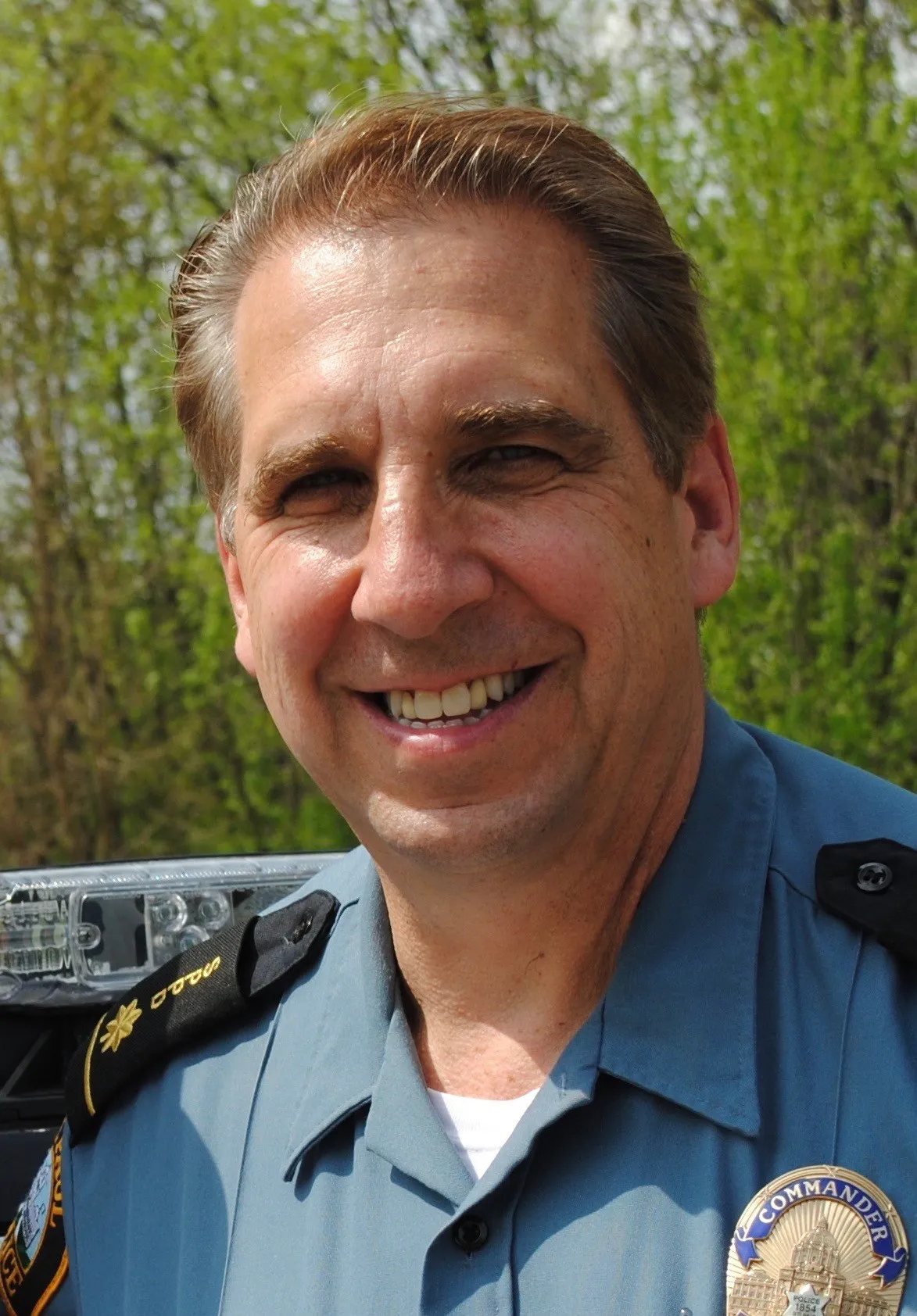 Photo: Bob Fletcher, via images.squarespace-cdn.com
Then his mower blade hit something that definitely wasn't supposed to be there.
The Clank That Changed Everything
The metallic scrape stopped Fletcher cold. In sixty years of farming this land, he'd hit plenty of rocks, old fence posts, and forgotten farm equipment. But this sound was different — sharper, more deliberate. When he backed up the mower and bent down to investigate, he found himself staring at a piece of rusted metal that looked suspiciously like it belonged in a museum.
Fletcher had always known his land held secrets. Local farmers occasionally turned up old arrowheads, and family stories mentioned strange artifacts found during spring plowing. But what he was looking at appeared to be a piece of Spanish armor — specifically, a section of chain mail that looked like it had been buried for centuries.
Being a practical man, Fletcher did what any sensible Kansas farmer would do: he called the local university.
The Call That Made Professors Drop Everything
Dr. Patricia O'Brien at the University of Kansas nearly hung up when Fletcher described finding "some old Spanish stuff" in his backyard. Kansas wasn't exactly known for Spanish colonial artifacts, and she'd fielded plenty of calls from well-meaning residents who'd found Civil War buttons or Native American pottery.
 Photo: University of Kansas, via wallpapers.com
But something in Fletcher's description made her pause. He mentioned chain mail, iron spear points, and what looked like crossbow bolts — a combination that would be virtually impossible to fake or misidentify. More intriguingly, his land sat in an area that Spanish colonial documents had always described in frustratingly vague terms.
Within 48 hours, O'Brien and a team of graduate students were on Fletcher's property with metal detectors, carefully excavating what would become known as the Coronado-Vásquez Site.
The Expedition That History Lost
What they found rewrite the textbooks. Literally.
Francisco Vásquez de Coronado's 1540-1542 expedition into North America was one of the most famous failures in exploration history. Searching for the mythical Seven Cities of Gold, Coronado led 300 Spanish soldiers and 1,000 indigenous allies from Mexico through the American Southwest and into the Great Plains. According to his own journals, the expedition reached a place they called "Quivira" — a Wichita settlement somewhere in present-day Kansas.
For over 150 years, historians had been guessing where Coronado actually went. Most placed his Kansas camp somewhere near Dodge City or Garden City, roughly 200 miles southwest of where Fletcher was mowing his lawn. The location had become one of those historical mysteries that generated academic papers but never definitive answers.
Fletcher's backyard proved everyone wrong.
The Evidence That Couldn't Be Ignored
The artifacts emerging from the Fletcher farm were unmistakably Spanish and unmistakably 16th century. Chain mail fragments matched samples from other confirmed Coronado sites in Arizona and New Mexico. Iron crossbow bolts bore the distinctive markings of Spanish military workshops. Most convincingly, the team found a small bronze cannon ball that chemical analysis proved was made from metal consistent with Spanish foundries of the 1540s.
But the smoking gun was a piece of iron bearing a partial inscription that translated to "...for the glory of His Catholic Majesty..." — the exact phrase that appeared on weapons issued to Coronado's expedition.
Dr. O'Brien later described the moment of realization: "We weren't just finding random Spanish artifacts. We were standing in the exact spot where Coronado's men had camped 452 years earlier. Bob Fletcher's lawn mower had just solved one of the oldest mysteries in American exploration history."
The Ripple Effects of a Mower Blade
The discovery forced a complete revision of Coronado's route through Kansas. New analysis of his journals, read in light of the Fletcher site's location, revealed that historians had been misinterpreting key geographical references for over a century. The expedition had traveled much farther north than anyone realized, following river systems that had since changed course.
More importantly, the find provided the first physical proof that Coronado's expedition had actually reached central Kansas. Previous evidence had been limited to journal entries and secondhand accounts from indigenous peoples. The Fletcher site offered tangible proof that Spanish soldiers had indeed marched across the American heartland decades before the Pilgrims landed at Plymouth Rock.
The Farmer Who Became a Curator
Fletcher, meanwhile, found himself thrust into a role he never expected: guardian of a national historical treasure. The Kansas State Historical Society designated his property as an official archaeological site, and the National Park Service added it to the National Register of Historic Places.
Rather than being overwhelmed by the attention, Fletcher embraced his unexpected role as a historical steward. He worked with archaeologists to establish proper excavation protocols, hosted visiting researchers, and even learned enough Spanish colonial history to give informal tours to curious visitors.
"I spent my whole life growing wheat on this land," Fletcher told a local newspaper in 1995. "Turns out I was growing history too. I just needed the right tool to harvest it."
The Lesson of the Accidental Archaeologist
The Fletcher discovery illustrates one of archaeology's most important truths: the most significant finds often come from the most unexpected places. Professional archaeologists had been searching for Coronado's Kansas camp for decades, using sophisticated analysis of historical documents and geographical surveys. It took a retired farmer with a lawn mower to actually find it.
Today, the Coronado-Vásquez Site continues to yield new insights into Spanish colonial exploration of North America. Ongoing excavations have uncovered evidence of interaction between Spanish soldiers and local Wichita peoples, providing rare glimpses into how European and indigenous cultures encountered each other on the Great Plains.
Bob Fletcher passed away in 2008, but his family continues to maintain the site and work with researchers. The mower blade that started it all is now on display at the Kansas State Historical Society, accompanied by a plaque that reads: "Sometimes history finds you when you're just trying to cut the grass."
In the end, Fletcher's discovery proves that American history is literally under our feet, waiting for the right moment — or the right mower blade — to resurface and remind us that the past is never as settled as we think it is.