The Man Who Accidentally Trademarked the Letter 'E' and Nearly Broke the Alphabet
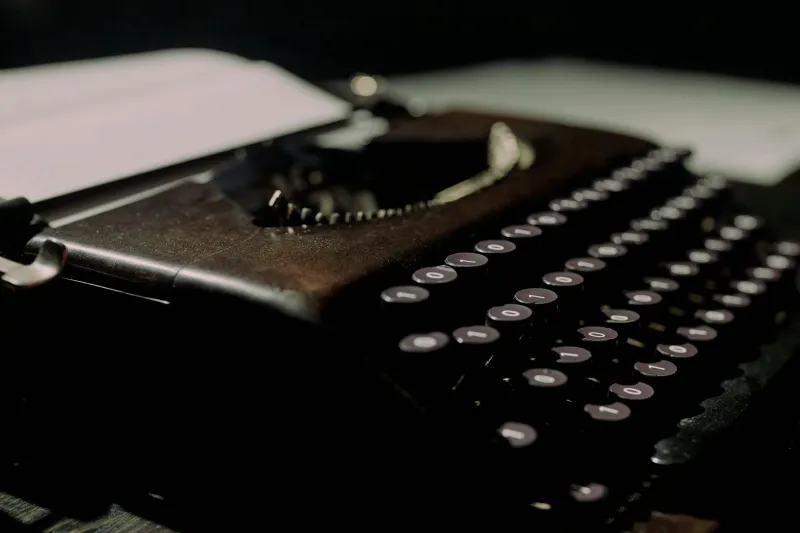
The Man Who Accidentally Trademarked the Letter 'E' and Nearly Broke the Alphabet
Imagine opening your morning newspaper to discover that someone now owns the letter 'E'—and you owe them royalties every time you use it. Sound impossible? Well, for nearly a decade in the 1940s, that nightmare scenario was closer to reality than anyone realized.
When Good Intentions Go Horribly Wrong
Robert Ellison had a simple goal: protect his innovative typeface designs from copycats. As a Baltimore-based typographer in 1938, he'd spent years perfecting a revolutionary font family that promised to make printed text more readable for people with vision problems. His typefaces featured subtly modified letterforms that reduced eye strain—a genuine breakthrough in an era before computer screens made readable fonts a billion-dollar industry.
But when Ellison sat down to file his intellectual property paperwork, he made a mistake that would haunt American courts for the next ten years. Instead of specifying his particular typeface designs, his patent application used language so broad it effectively claimed ownership over "the commercial use of modified alphabetic characters, including but not limited to enhanced versions of standard letterforms."
To patent lawyers reading this today, those red flags would be visible from space. But in 1938, intellectual property law was still catching up to the modern world. Ellison's application sailed through the initial review process without anyone noticing he'd just attempted to trademark basic letters of the alphabet.
The Letter That Nearly Broke Everything
The problems started small. A Chicago printing company received a cease-and-desist letter demanding they stop using "unauthorized enhanced letterforms" in their advertising materials. When lawyers examined Ellison's patent more closely, they realized the terrifying scope of what he'd accidentally claimed.
Technically speaking, Ellison's patent could be interpreted as giving him exclusive commercial rights to any stylized version of common letters—including the letter 'E,' which appeared in virtually every piece of printed material in America. Since fonts naturally modify the appearance of standard letters, his patent potentially covered every typeface in existence.
"It was like someone had accidentally filed a patent on the color blue," explained legal historian Dr. Margaret Chen, who studied the case for her book on early intellectual property law. "Suddenly, every printer, publisher, and advertiser in America was potentially infringing on this one man's patent."
Courts Gone Wild
What followed was a legal circus that would make modern patent trolls jealous. Ellison, initially horrified by the implications of his own filing, tried to narrow his claims. But other parties—including some questionable legal opportunists—began filing their own alphabet-related patents, hoping to cash in on the confusion.
By 1942, at least seventeen separate legal cases were working their way through American courts, each involving some aspect of letter ownership. One particularly absurd case in Philadelphia involved a newspaper that argued they couldn't be infringing on the letter 'E' because their printing press was old enough to predate Ellison's patent.
Another case featured dueling expert witnesses debating whether a serif constituted a "modification" of a basic letterform. The transcript from that hearing reads like something out of Alice in Wonderland, with grown adults spending hours arguing about the legal implications of tiny decorative lines on letters.
The Secret Solution
While lawyers battled over alphabetic ownership, something remarkable was happening behind the scenes. A coalition of publishers, printers, and typographers had quietly formed what they called the "Alphabet Defense League." This group included everyone from major newspapers to small-town print shops, all united by their shared terror of paying royalties for using basic letters.
The League hired some of the best intellectual property lawyers money could buy and developed a coordinated legal strategy. Instead of fighting each case individually, they would attack the fundamental premise that anyone could own letters of the alphabet. Their argument was both simple and brilliant: since the English alphabet predated any living person by centuries, it belonged to everyone and no one.
The Ruling That Changed Everything
In 1947, the case finally reached the Supreme Court in a consolidated hearing that legal scholars still study today. The Court's ruling was swift and decisive: no one could own exclusive rights to basic letters of the alphabet, regardless of how those letters were modified or enhanced.
But the Court went further, establishing what became known as the "Ellison Doctrine"—a set of guidelines that still govern how intellectual property law applies to basic communication tools. The ruling established that certain fundamental elements of human communication—letters, numbers, basic geometric shapes—exist in a kind of legal commons that no individual or corporation can claim.
The Accidental Legacy
Robert Ellison never made a dime from his alphabet adventure. In fact, the legal fees nearly bankrupted him. But his accidental overreach fundamentally shaped how America handles intellectual property disputes today. Every time a tech company tries to patent something too broad, every time a designer creates a new font without fear of alphabet lawsuits, they're benefiting from the chaos one Baltimore typographer accidentally unleashed in 1938.
The case also established important precedents for protecting everyday communication from corporate ownership—precedents that became crucial decades later when companies began trying to trademark common words and phrases in the digital age.
Still Shaping Our World
Today, Ellison's story sounds like something from a parallel universe where capitalism went completely insane. But legal experts point out that without his accidental alphabet grab, we might be living in a world where basic communication tools could be owned by private companies.
"Ellison accidentally stress-tested the entire concept of intellectual property," notes patent attorney James Rodriguez. "His mistake helped establish boundaries that protect everyone's right to use basic building blocks of human communication."
So the next time you type the letter 'E'—which you probably just did several times while reading this sentence—remember Robert Ellison. The man who accidentally tried to own the alphabet, and in doing so, helped ensure that no one ever could.