How One Stubborn Michigan Town Legally Blocked the U.S. Mail for 40 Years
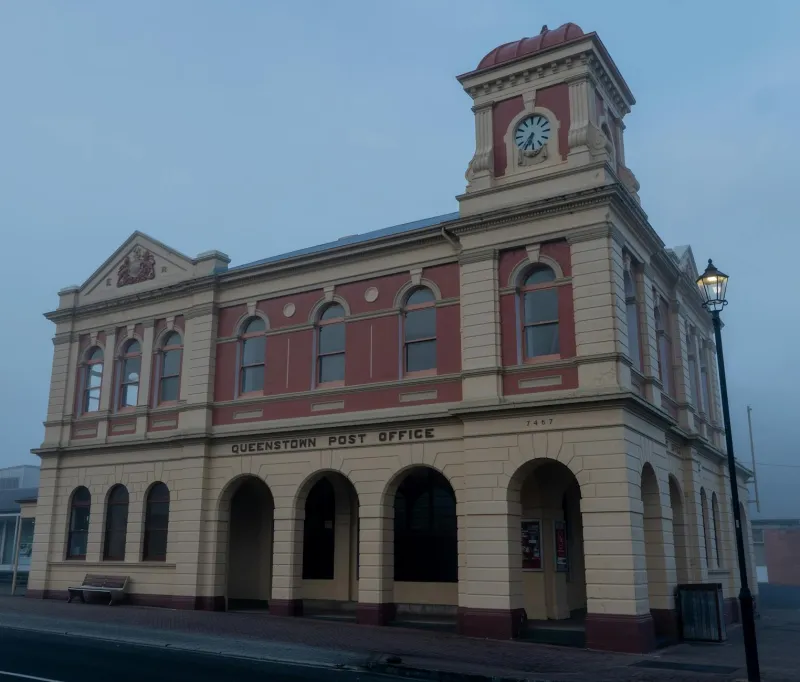
The Town That Said 'Return to Sender' to Uncle Sam
Imagine telling the United States government to take their post office and shove it. Now imagine actually getting away with it for four decades. That's exactly what happened in the tiny community of Ocqueoc, Michigan, where a handful of determined residents turned legal loopholes into an art form and kept federal mail service out of their town longer than almost anywhere else in American history.
The year was 1847, and the U.S. Postal Service was expanding westward like everything else in America. Small towns across the frontier were eager to get connected to the growing mail network—it meant commerce, communication, and a stamp of legitimacy from Washington. But Ocqueoc wasn't like other towns.
When Stubbornness Meets the Law
The trouble started when federal postal inspectors arrived in Ocqueoc to scout locations for a new post office. What they found was a community that had done something unusual: they'd incorporated under Michigan state law with a series of local ordinances so specific and legally bulletproof that they essentially controlled every square inch of property within town limits.
The townspeople, led by a former lawyer named Jeremiah Blackwood, had crafted municipal bylaws that required any federal building to meet impossibly specific criteria. The proposed post office would need to be constructed of "locally quarried limestone of a particular hue," positioned exactly 47 feet from the nearest property line, and designed with architectural features that simply didn't exist in standard postal building plans.
But here's where it gets truly bizarre: these weren't just arbitrary demands. Blackwood and his neighbors had researched federal property acquisition law and discovered that the government could only seize land for postal use if local building codes couldn't be "reasonably accommodated." By making their codes unreasonable but technically legal, they'd created a bureaucratic trap.
The Federal Government Meets Its Match
Washington's response was predictably bureaucratic. They sent surveyors, lawyers, and eventually a team of federal architects to try to design a post office that could meet Ocqueoc's requirements. The limestone had to be quarried from a specific hillside that the town conveniently owned. The 47-foot setback requirement meant the building would have to be built partially over a creek. And the architectural specifications called for features like "windows facing the four cardinal directions with panes numbering exactly 12 per side"—details that would have made the building cost more than some courthouses.
For years, federal officials tried everything. They offered to buy the limestone quarry (the town wouldn't sell). They proposed alternative sites (all rejected for various technical violations). They even threatened to invoke eminent domain, only to discover that Michigan state law protected municipalities' right to set building standards, even if those standards were completely bonkers.
When David Actually Beats Goliath
The standoff dragged on through the 1850s, 1860s, and beyond. Mail bound for Ocqueoc had to be delivered to neighboring towns, where residents would pick it up—a system that was inefficient but perfectly legal. The federal government was spending more money trying to establish this one post office than they spent on postal operations in entire territories.
Meanwhile, Ocqueoc's population was growing. Word spread about the town that had legally thumbed its nose at federal authority, and it attracted a particular type of resident: people who valued independence over convenience. By the 1870s, the community had several hundred residents, all of whom seemed perfectly content to drive to the next town for their mail.
The most absurd part? The town's legal strategy was so airtight that it inspired copycat efforts across the Midwest. Federal postal records from the 1860s show at least a dozen communities that adopted similar "Ocqueoc ordinances" to control or delay federal building projects.
The Unexpected Resolution
The standoff finally ended in 1887, not because the government won, but because Ocqueoc's residents simply changed their minds. A new generation of townspeople voted to modify the building codes, allowing for a standard post office design. By then, the original holdouts were elderly or had moved away, and the community's priorities had shifted.
The Ocqueoc Post Office finally opened on March 15, 1888—exactly 41 years after the federal government first tried to establish it. The building was a standard-issue postal facility that violated virtually every one of the town's original ordinances, but nobody seemed to care anymore.
The Legacy of Legal Stubbornness
Today, Ocqueoc is a quiet community along Michigan's northern coast, and most residents have no idea their town once waged a four-decade legal war against the U.S. Postal Service. The original post office building still stands, now serving as a local history museum that tells the story of America's most successful case of bureaucratic resistance.
The Ocqueoc standoff remains a fascinating footnote in the history of federal authority—proof that sometimes, when ordinary citizens really, really don't want something, they can find ways to make the impossible happen. It's a reminder that in America, even the federal government has to follow the rules, especially when those rules are written by people stubborn enough to wait 40 years to get their mail delivered.