When Parents Legally Shipped Their Kids Through the Mail to Save on Train Tickets
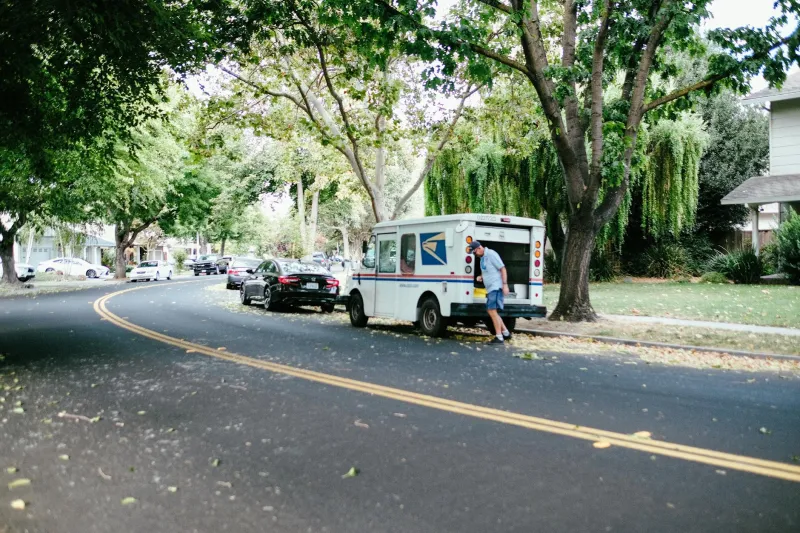
The Day the Post Office Became a Passenger Service
Picture this: You're a postal worker in 1913, sorting through the usual packages and letters, when suddenly you hear crying coming from a large parcel. You peel back the wrapping to find a two-year-old girl with stamps stuck to her coat, officially mailed from her parents to her grandmother 73 miles away.
This wasn't a kidnapping or some elaborate prank. This was perfectly legal.
How Mailing Children Became a Thing
When the U.S. Postal Service launched parcel post in 1913, they created what seemed like a simple service: ship packages up to 11 pounds anywhere in the country for cheap. What they didn't anticipate was that some creative parents would interpret "packages" quite literally.
The first documented case happened just months after parcel post began. An Ohio couple, facing expensive train fares to send their infant son to his grandparents, noticed something interesting in the postal regulations. There was no specific rule against mailing... people.
So they did what any budget-conscious parent would do: they slapped 15 cents worth of stamps on their baby, handed him to their friendly mail carrier, and sent him on his way. The postal worker, apparently unbothered by this unusual "package," delivered the child without incident.
The Loophole That Launched a Thousand Deliveries
Word spread quickly through small-town America. If you could mail a baby for 15 cents instead of paying several dollars for train fare, why wouldn't you?
The most famous case involved May Pierstorff, a six-year-old from Idaho whose parents wanted to send her to visit her grandmother 73 miles away. Train fare would have cost her family significantly more than the 53 cents in stamps they attached to her coat. The local mail carrier, who happened to know the family well, agreed to "deliver" May as part of his regular route.
May rode in the mail car, chatted with postal workers, and arrived safely at her grandmother's house, officially delivered by the United States Postal Service. The story made national headlines, turning a cost-saving measure into a media sensation.
Not Just Babies: The Full Range of Human Mail
The practice wasn't limited to infants. Parents mailed toddlers, young children, and in at least one documented case, a group of siblings traveled together as a "package deal." The age limit seemed to be determined more by the weight restriction than any sense of propriety.
Postal workers, many of whom knew the families personally in small towns, often treated these human deliveries as just another part of the job. They'd let children ride in mail cars, share their lunches, and make sure the "packages" arrived safely at their destinations.
Some entrepreneurial parents even figured out return shipping. Children would visit relatives for extended periods, then get mailed back home when the visit was over, complete with return postage.
The Government Steps In
By 1914, the Postal Service realized they had a problem. While no children had been seriously harmed during their postal journeys, the practice was getting out of hand. Stories of mailed children were appearing in newspapers across the country, and postal officials worried about liability, safety, and the increasingly creative interpretations of their parcel regulations.
The Postmaster General issued a decisive ruling: human beings were not packages and could not be sent through the mail, regardless of weight or postage paid. The era of mailed children officially ended, though it took several years for the practice to completely disappear in remote areas.
Why This Actually Worked
The strangest part of this story isn't that parents tried to mail their children – it's that it actually worked. The early postal service operated on personal relationships and community trust. Mail carriers knew their customers, often walking the same routes for years. In small towns, the mailman wasn't just a government employee; he was a neighbor.
This personal connection made the impossible seem routine. When a trusted mail carrier agreed to "deliver" a child, families saw it as a safe, affordable alternative to expensive transportation. The children, often treated as special passengers rather than cargo, generally enjoyed the adventure.
The Legacy of Human Mail
While the practice ended over a century ago, it represents a uniquely American moment when bureaucratic loopholes, economic necessity, and small-town ingenuity collided. These families found a creative solution to a real problem, even if their interpretation of postal regulations was, shall we say, liberal.
Today, the idea of mailing a child seems absurd, even dangerous. But in an era when a cross-country train ticket could cost a month's wages and the postal service was the most reliable institution in many communities, it made perfect sense.
The next time you complain about shipping costs, remember: there was once a time when the cheapest way to send your kid to grandma's house was literally through the mail. And somehow, it actually worked.