The Radio Pirate Who Claimed His Own Island Nation and Somehow Made It Stick
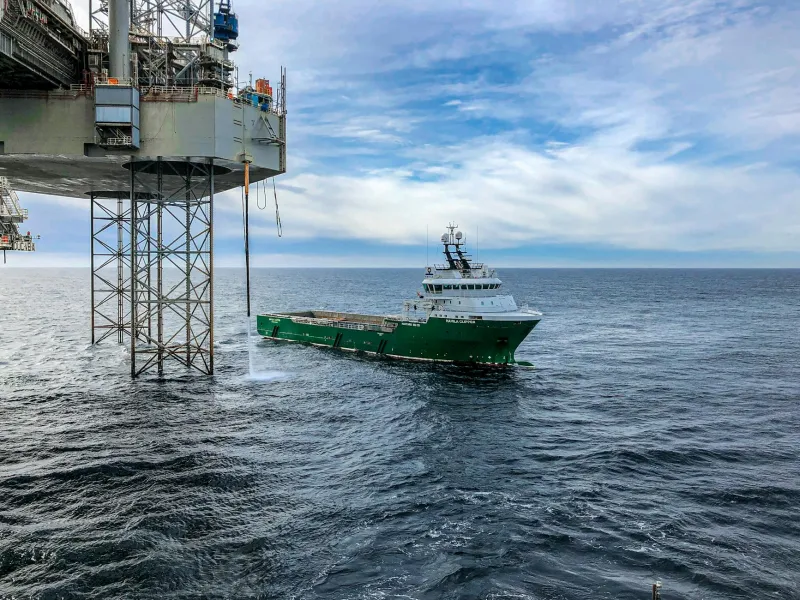
Picture this: You're a former British Army major turned pirate radio DJ, and you're tired of the government shutting down your illegal broadcasts. So you do what any reasonable person would do — you sail out to an abandoned military platform in the North Sea, plant a flag, and declare independence from the entire United Kingdom.
Sounds insane, right? Well, that's exactly what Roy Bates did in 1967, and somehow, against all odds, he pulled it off.
When Pirate Radio Met International Law
Roy "Paddy" Bates wasn't your typical revolutionary. The former British Army major had gotten into the pirate radio business in the 1960s, when BBC's monopoly on broadcasting left British youth hungry for rock and roll. Like dozens of other operators, Bates set up Radio Essex on various offshore platforms beyond Britain's territorial waters.
But Bates had bigger ambitions than just spinning records. In September 1967, he sailed out to Roughs Tower, a concrete and steel fortress built during World War II to defend against German aircraft. The platform sat seven miles off the English coast — crucially, just outside Britain's three-mile territorial limit at the time.
What started as a publicity stunt for his radio station quickly turned into something much stranger. On September 2, 1967, Bates declared the platform the "Principality of Sealand," appointed himself Prince Roy, and crowned his wife Joan as Princess. Their teenage son Michael became the heir apparent.
The British government's response? Basically, "You can't do that." Bates' response? "Watch me."
The Lawsuit That Changed Everything
Here's where things get legally bizarre. In 1968, British authorities arrested Bates' son Michael for firing warning shots at a British naval vessel that had strayed too close to Sealand. When the case went to court, something unprecedented happened.
The judge ruled that since Sealand lay outside British territorial waters, British courts had no jurisdiction over what happened there. In essence, a British court had just acknowledged — however reluctantly — that Sealand might actually be beyond British legal reach.
Bates took this as official recognition of Sealand's independence. Legal experts still argue about whether that's what the ruling actually meant, but try telling that to Prince Roy.
The Coup That Proved Sealand Was Serious
By the 1970s, Sealand had developed all the trappings of a real nation: passports, stamps, currency, and even a national anthem. But in 1978, the principality faced its greatest test when a group of German and Dutch businessmen attempted a hostile takeover.
Led by Alexander Achenbach (who had been appointed Sealand's "Prime Minister" in earlier negotiations), the conspirators took control of the platform while Roy was away, holding Prince Michael hostage. It was a real-life coup attempt on a platform the size of two tennis courts.
Roy Bates wasn't about to let his country get stolen. He organized a counter-coup, arriving by helicopter with armed supporters to retake Sealand. The would-be usurpers were captured, and Achenbach was charged with treason against Sealand — possibly the first and only time someone has been charged with treason against a country that may or may not exist.
The situation got even weirder when Germany sent a diplomat to negotiate Achenbach's release, which Sealand interpreted as de facto recognition of its sovereignty. After all, you don't send diplomats to negotiate with illegal squatters.
A Nation That Refuses to Disappear
Over the decades, Sealand has faced numerous challenges to its existence. Britain extended its territorial waters to twelve miles in 1987, technically encompassing Sealand, but the Bates family argued they were grandfathered in under international law. Various governments have tried to shut them down, dismiss them, or simply ignore them into nonexistence.
None of it worked. Today, Sealand operates a website selling noble titles, maintains an official football team (though finding opponents willing to travel to a platform in the North Sea proves challenging), and continues issuing passports that some countries actually accept for travel.
The principality has survived storms that would sink most ships, political pressure from multiple governments, and the simple passage of time that has claimed countless other micronations. When Roy Bates died in 2012, his son Michael inherited the throne, ensuring Sealand's continuation into a second generation.
The Accidental Country That Wouldn't Quit
What makes Sealand truly bizarre isn't just its origin story — it's the fact that this accidental nation has somehow outlasted many intentional ones. While countless revolutionary movements have failed to establish lasting independence, a pirate radio operator's publicity stunt has endured for over half a century.
Sealand exists in a legal gray area that international law wasn't designed to handle. It's too small and weird for most countries to bother conquering, too persistent to ignore, and just legitimate enough to create diplomatic headaches for anyone who tries to shut it down.
Today, as you read this, there's a 120-by-50-foot platform sitting in the North Sea where a family still claims to rule their own country. They have a flag, a national motto ("E Mare Libertas" — From the Sea, Freedom), and decades of experience proving that sometimes the most ridiculous ideas are the ones that stick.
Roy Bates set out to broadcast rock music and ended up creating what might be the world's most successful accident in nation-building. Not bad for a day's work.