This Tennessee Town Has Been Burning Underground for 50 Years and There's No Way to Stop It
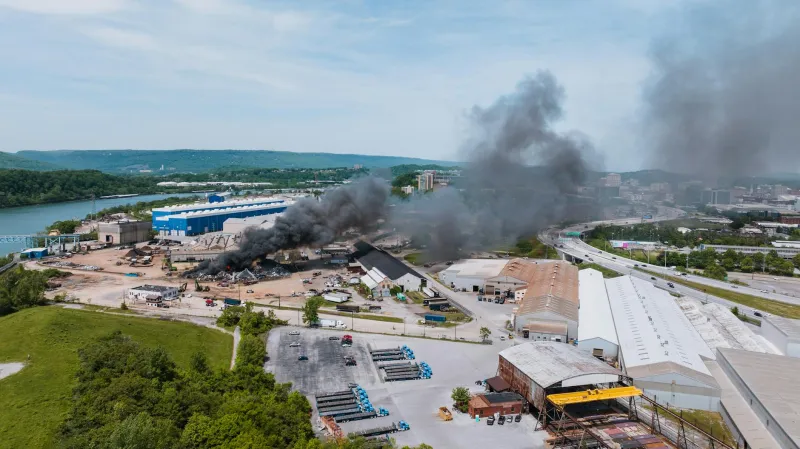
Imagine walking across your backyard and feeling the ground warm beneath your feet. Not summer-warm, but genuinely hot, like there's an oven running underneath your lawn. Now imagine that heat has been there for over 50 years, and despite the best efforts of engineers and government agencies, nobody can figure out how to turn it off. Welcome to life in Widows Creek, Tennessee.
The Fire That Started Everything
Sometime in the early 1970s, a coal seam beneath this quiet Tennessee community caught fire. Nobody's entirely sure how it started – maybe a lightning strike, perhaps an old mine shaft that wasn't properly sealed, or possibly just the spontaneous combustion that coal is unfortunately famous for. What everyone does know is that once it started burning, it never stopped.
Unlike the dramatic flames you might imagine, underground coal fires burn slow and steady, creeping through seams at a pace measured in feet per year rather than miles per hour. They're invisible from the surface most of the time, but their effects are impossible to ignore. Residents of Widows Creek have spent decades dealing with ground that's hot to the touch, sinkholes that appear without warning, and the persistent smell of sulfur that hangs in the air like a reminder that something's very wrong beneath their feet.
Living Above a Slow-Motion Disaster
The people of Widows Creek have developed an almost casual relationship with their underground fire. They know which parts of town get uncomfortably warm, where the ground is likely to crack, and when the sulfur smell gets strong enough to keep windows closed. It's become part of the local culture in the most surreal way possible.
Some residents have even found creative uses for their geological curse. A few have used the warm ground to help heat their homes in winter, though officials strongly discourage this practice. Others have become amateur geologists, tracking the fire's progress and predicting where problems might emerge next. It's the kind of community adaptation that sounds almost cozy until you remember they're literally living on top of a disaster that could last for centuries.
Why Underground Fires Are Nearly Impossible to Stop
Here's the truly mind-bending part: underground coal fires are incredibly common across the United States, and we're remarkably bad at putting them out. Pennsylvania alone has dozens of them burning right now. The problem is that coal fires underground have access to three things they need to keep going: fuel (more coal), oxygen (seeping down through cracks), and heat (which they generate themselves).
Traditional firefighting methods don't work when the fire is 20 feet underground and spread across several acres. You can't spray water on something you can't reach, and even if you could, the amount needed would flood entire towns. Some attempts have involved digging up the burning coal, but that often just exposes more coal to oxygen and makes the problem worse.
The most successful approach is usually to try to cut off the fire's air supply by sealing cracks and installing barrier walls, but coal seams are notoriously good at finding new ways to breathe. It's like playing whack-a-mole with geological forces that operate on timescales that make human planning look laughably short-term.
The Hidden Epidemic Nobody Talks About
What makes the Widows Creek situation even more bizarre is how normal it's become. While Centralia, Pennsylvania got famous for its underground fire and eventual evacuation, dozens of other communities across coal country just... live with it. There are underground fires burning in Colorado, Utah, West Virginia, and Kentucky that most Americans have never heard of.
These fires represent a strange category of disaster – not dramatic enough for constant news coverage, but too expensive and complex for easy solutions. They're the geological equivalent of a chronic illness: manageable most of the time, occasionally flaring up into something more serious, but always there in the background.
The Long Burn Ahead
Experts estimate that the Widows Creek fire could burn for another century or more, depending on how much coal remains in the seam and how successfully officials can limit its access to oxygen. The residents have essentially become participants in a very long, very slow experiment in human adaptation.
Some families have lived with the fire for their entire lives. Children grow up knowing which parts of the playground get too hot in summer, teenagers learn to drive around the areas where sinkholes are most likely, and adults plan their gardens around ground that might suddenly become too warm for certain plants.
It's a reminder that not all disasters are sudden and dramatic. Sometimes they're just persistent and weird, burning quietly beneath our feet while we figure out how to live with forces that operate on timescales far beyond human comfort zones. In Widows Creek, the fire isn't going anywhere soon, and neither, apparently, are the people who've learned to call a burning town home.