When Justice Gets Jumbo-Sized
On September 13, 1916, the small town of Erwin, Tennessee became the site of one of the most bizarre legal proceedings in American history. The defendant: a five-ton Asian elephant named Mary. The charge: murder in the first degree. The sentence: death by hanging. The venue: the local railroad yard, with an audience of nearly 3,000 spectators who had traveled from across the region to witness what newspapers called "the execution of the century."
This wasn't some medieval throwback or frontier justice gone wrong. This was 1916 America, complete with automobiles, electric lights, and a legal system that had supposedly evolved beyond putting animals on trial. Yet here was an entire community that had collectively decided the appropriate response to a workplace accident was to stage a public execution of a circus elephant.
The Incident That Started It All
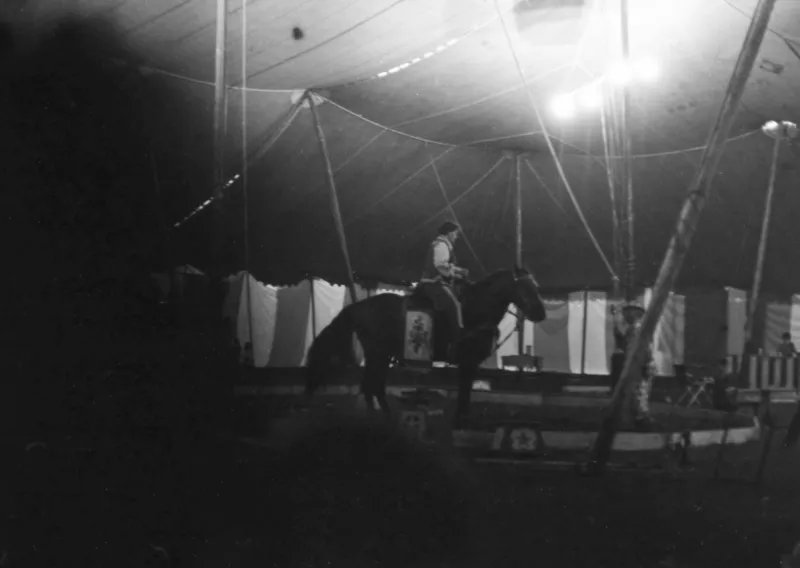
Mary was the star attraction of Sparks World Famous Shows, a traveling circus making its way through the rural South. She was billed as "the largest living land animal on Earth" and had been performing for decades without incident. But on that September afternoon in nearby Kingsport, everything went wrong.
Walter Eldridge, a recently hired circus hand with no elephant experience, was leading Mary to a watering hole when she stopped to munch on some watermelon rinds thrown by spectators. When Eldridge prodded her with a metal hook to keep moving, Mary apparently decided she'd had enough of amateur elephant handlers. In one swift motion, she grabbed Eldridge with her trunk, threw him against a drink stand, and stepped on his head.
The crowd that had gathered to watch the circus parade suddenly found themselves witnessing something far more dramatic than any big top performance. Eldridge was dead, and Mary stood over his body, still chewing watermelon rinds as if nothing had happened.
When Mob Justice Meets Pachyderm Problems
What happened next reveals something deeply unsettling about early 20th-century American mob mentality. Rather than treating this as a tragic workplace accident involving a wild animal, the crowd immediately began calling for revenge. Someone shouted "Kill the elephant!" and the cry was taken up by hundreds of voices.
Local authorities found themselves in an impossible position. The rational response would have been to have Mary humanely euthanized by a veterinarian. But rationality had left the building. The crowd wanted justice, and in their minds, justice meant a public execution.
Charlie Sparks, the circus owner, initially tried to protect his star performer. But when word spread to nearby towns, the situation spiraled out of control. Mayors from multiple communities threatened to ban the circus entirely if Mary wasn't "brought to justice." Some towns even organized armed groups, promising to shoot Mary on sight if the circus attempted to pass through.
Faced with the choice between losing his entire business or sacrificing one elephant, Sparks made the decision that would haunt him for the rest of his life.
The Logistics of Executing an Elephant
Executing a five-ton elephant presents certain practical challenges that most communities never have to consider. Shooting was deemed too dangerous—stray bullets could hit spectators, and wounded elephants are notoriously difficult to stop. Poison was ruled out as inhumane. That left hanging, which presented its own engineering problems.
The town of Erwin volunteered to host the execution, partly because they had the necessary equipment: a 100-ton railroad crane capable of lifting Mary's massive weight. What followed was a grotesque carnival atmosphere as thousands of people poured into the small Tennessee town to witness the spectacle.
Local businesses stayed open late to accommodate the crowds. Photographers set up equipment to capture the historic moment. Parents brought their children, apparently considering this educational entertainment. The circus even sold tickets to help offset their losses, turning Mary's execution into one final, macabre performance.
The Execution That Went Wrong
On execution day, Mary was led to the railroad yard with surprising cooperation—she had been performing with humans for so long that she followed commands even to her death. The first attempt to hang her was a disaster. The chain broke under her weight, and Mary crashed to the ground, badly injured but still alive.
The crowd, rather than being horrified by this botched execution, became more bloodthirsty. They demanded the hanging be attempted again, this time with a stronger chain. Mary, now injured and terrified, was hoisted up a second time. This attempt succeeded, and Mary died in front of thousands of cheering spectators.
Photographs of the execution were sold as postcards throughout the region, becoming some of the most disturbing souvenirs in American history. These images, which still surface occasionally in antique shops, serve as a chilling reminder of how quickly civilization can give way to mob rule.
The Aftermath of America's Strangest Trial
The execution of Mary marked a turning point in how American circuses handled dangerous animals. Many shows began phasing out elephant acts entirely, while others implemented stricter safety protocols and hired experienced handlers. The incident also contributed to growing concerns about animal welfare in entertainment, though it would be decades before these concerns led to meaningful reforms.
Charlie Sparks never got over the loss of Mary, both financially and emotionally. His circus struggled for years afterward, and he frequently spoke of his regret over the decision. Several other performers and circus employees quit in protest, unable to continue working for an organization that had participated in such a spectacle.
For the town of Erwin, the execution became a source of both fame and shame. While some residents initially celebrated their role in this "historic justice," many later came to view the incident as an embarrassing chapter in their community's history.
Lessons from a Lynching
The execution of Mary reveals uncomfortable truths about American society in 1916. This wasn't frontier justice or medieval superstition—it was a modern community that collectively decided to stage a public execution based on emotion rather than reason. The fact that thousands of people traveled to watch an elephant die says something disturbing about the entertainment value early Americans found in public violence.
Today, the story serves as a reminder of how quickly fear and anger can override rational thinking, even in supposedly civilized communities. It also highlights the vulnerability of animals in human entertainment, a issue that continues to evolve as society's understanding of animal rights and welfare advances.
Mary's story remains one of the most bizarre legal proceedings in American history—a day when a Tennessee town decided that justice required putting an elephant on trial, and thousands of people agreed that watching her die was worth the price of admission.