The Wallpaper That Popped: How Two Engineers Accidentally Created America's Most Satisfying Invention
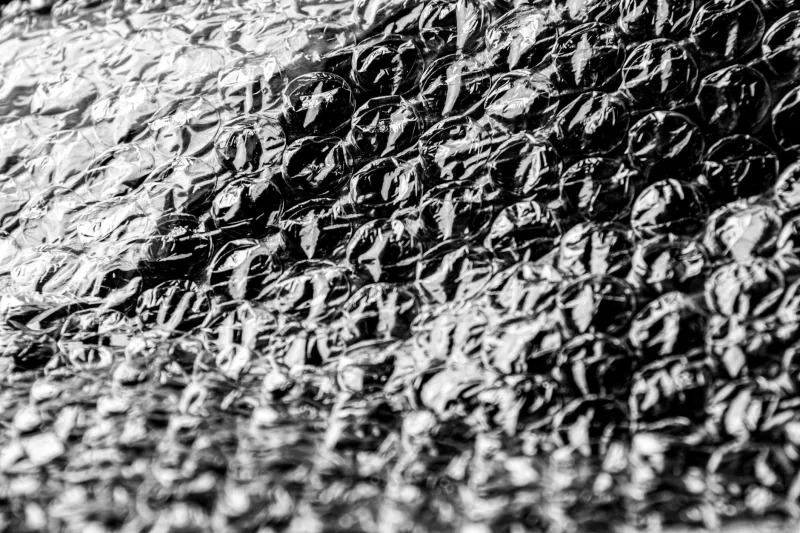
Picture this: you're trying to invent the next big thing in home décor, spending months perfecting a revolutionary textured wallpaper that will transform American living rooms. You finally crack the formula, produce your prototype, and... nobody wants it. Not even a little bit.
That's exactly what happened to Alfred Fielding and Marc Chavannes in 1957, and thank goodness it did. Because their spectacular failure gave us one of the most beloved inventions in modern history: bubble wrap.
The Great Wallpaper Experiment
Fielding and Chavannes weren't your typical inventors. Working out of a garage in Hawthorne, New Jersey, they had big dreams of creating something that would revolutionize interior design. Their idea seemed brilliant: take two plastic shower curtains, seal them together with air bubbles trapped between the layers, and voilà — instant textured wallpaper that would add dimension and style to any room.
The process worked perfectly. They successfully created sheets of plastic filled with uniform air pockets that created an interesting bumpy texture. There was just one tiny problem: absolutely nobody wanted to hang it on their walls.
The textured plastic looked weird, felt strange, and didn't exactly scream "sophisticated home décor." After months of trying to convince retailers and homeowners that bubble-filled plastic was the future of wallpaper, the two inventors were stuck with a product nobody wanted and a garage full of what seemed like expensive trash.
From Walls to Greenhouses
Most people would have given up, but Fielding and Chavannes were nothing if not persistent. If people didn't want their invention on their walls, maybe they could find another use for it. After some brainstorming, they pivoted to marketing their bubble-filled plastic as greenhouse insulation.
The logic made sense: the air pockets would provide insulation while still allowing light through. They called it "Air Cap" and started pitching it to greenhouse operators across the country. This time, they actually found some buyers. A few greenhouse owners were willing to try the strange new material, and it worked reasonably well for keeping plants warm.
But even as greenhouse insulation, Air Cap wasn't exactly flying off the shelves. For three years, Fielding and Chavannes watched their invention generate modest sales while they dreamed of the breakthrough that would make their creation a household name.
IBM Changes Everything
Then, in 1960, everything changed thanks to a computer company's shipping problem.
IBM had just launched their new 1401 computer system — a massive, expensive piece of equipment that needed to be shipped safely across the country. The problem was that traditional packaging materials like newspaper and foam peanuts weren't cutting it. These valuable machines were arriving at their destinations damaged, costing IBM a fortune in repairs and replacements.
Someone at IBM heard about this weird bubble-filled plastic that was being used in greenhouses and wondered if it might work for protecting computers during shipping. They contacted Fielding and Chavannes, ordered some samples, and ran tests.
The results were remarkable. The air-filled bubbles provided perfect cushioning, absorbing shock and protecting delicate equipment better than anything else on the market. IBM immediately placed a massive order, and suddenly, the failed wallpaper had found its true calling.
The Accidental Empire
What happened next was pure business magic. Word spread throughout the shipping industry about this revolutionary new packaging material. Companies across America started using bubble wrap to protect everything from fragile electronics to delicate artwork. The material that nobody wanted on their walls became indispensable for protecting valuable items in transit.
Fielding and Chavannes founded Sealed Air Corporation in 1960, and their accidental invention became the foundation of a packaging empire. Today, Sealed Air is a billion-dollar company, and bubble wrap is produced in facilities around the world.
But here's the truly bizarre part: the invention that made them millionaires was never supposed to exist in the first place. If their wallpaper had been successful, they probably would have spent their careers in the home décor business, and the world would have missed out on one of its most satisfying simple pleasures.
The Psychology of Pop
Because let's be honest — bubble wrap's greatest achievement isn't protecting packages. It's providing stress relief to millions of people who can't resist popping those little air bubbles. Scientists have actually studied this phenomenon and found that the act of popping bubble wrap releases endorphins and reduces stress levels.
There's even an official Bubble Wrap Appreciation Day (the last Monday in January), and the sound of popping bubble wrap has been used in meditation apps and stress-relief programs. Not bad for a product that was originally designed to make living rooms look more interesting.
The Lesson in Beautiful Failures
The story of bubble wrap is a perfect reminder that some of the best inventions come from spectacular failures. Fielding and Chavannes set out to change how Americans decorated their homes and ended up revolutionizing how the world ships fragile items. Their "failed" wallpaper became more successful than they ever could have imagined.
So the next time you're unwrapping a package and can't resist popping a few bubbles, remember that you're enjoying the fruits of one of history's most productive failures. Sometimes the best discoveries happen when we're trying to create something completely different — and sometimes the most satisfying inventions are the ones that were never meant to exist at all.