The Street Where Yesterday and Today Existed at the Same Time
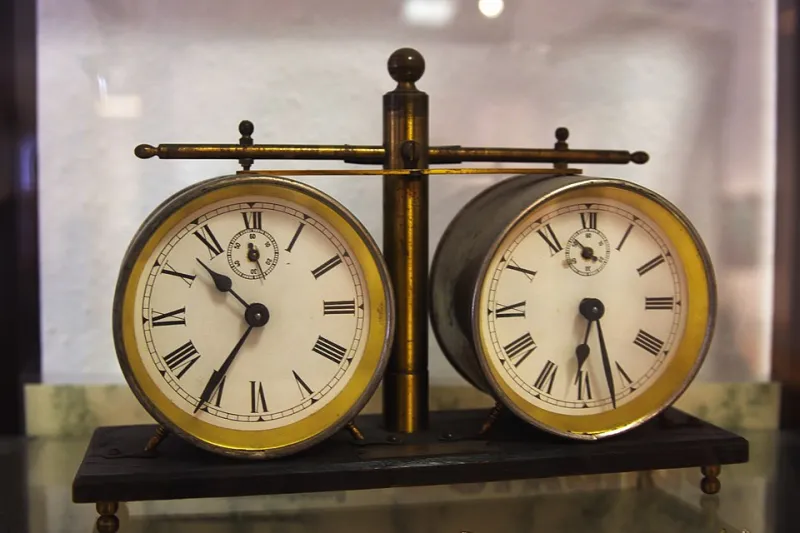
Photo: Mussklprozz, CC BY-SA 4.0, via Wikimedia Commons
Imagine setting your alarm for 7 a.m., walking across the street to your neighbor's house, and arriving at 6 a.m. without ever leaving your neighborhood. No science fiction required. No wormhole necessary. Just a property line, a stubborn county commission, and the most chaotic time zone situation in American history.
For a stretch of decades in the twentieth century, this was daily life for residents of several communities along the Indiana-Ohio border — and the stories they tell about scheduling a doctor's appointment, catching a school bus, or simply agreeing on when to meet for lunch sound less like small-town Americana and more like a philosophy thought experiment that got out of hand.
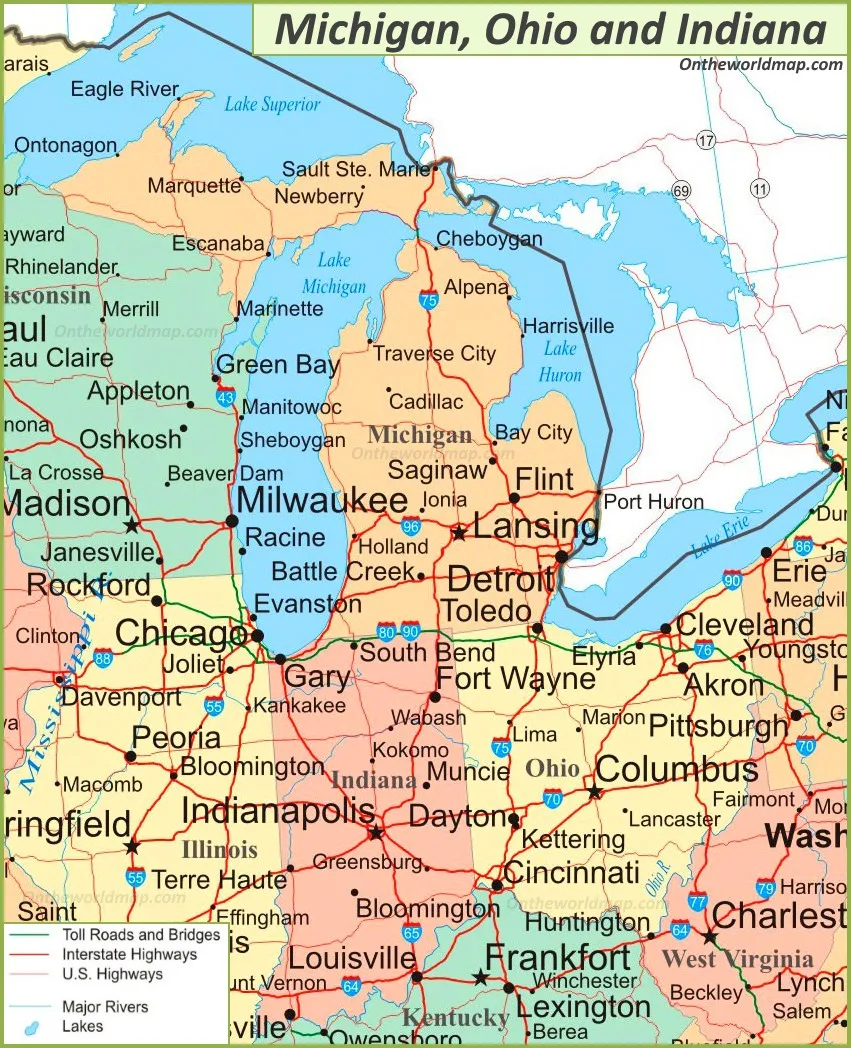 Photo: Indiana-Ohio border, via ontheworldmap.com
America's Time Zone Problem Is Older Than You Think
To understand how a single street ended up in two different hours, you have to understand that America's relationship with time zones has always been a little unhinged.
Before standardized time zones were introduced in 1883 — pushed through largely by the railroad industry, which was understandably frustrated by trying to run trains on hundreds of different local times — American communities generally operated on solar time. Noon was when the sun was highest overhead, which meant every town had its own clock and the idea of being "on time" was entirely relative to your longitude.
The railroad system imposed order, but the underlying chaos never fully went away. Congress formalized time zones in 1918, but crucially left states and counties with significant flexibility to choose which zone they observed and whether they participated in Daylight Saving Time. Indiana, in particular, became legendary for its resistance to any uniform timekeeping policy. For much of the twentieth century, different Indiana counties observed different times, and the state didn't fully standardize until 2006.
The Border Towns That Fell Through the Cracks
The communities along the Indiana-Ohio border occupied a uniquely strange position in this patchwork system. Ohio followed Eastern Time reliably. Indiana, meanwhile, was doing whatever Indiana felt like doing at any given moment — and what Indiana felt like doing changed repeatedly over the decades depending on which counties had successfully lobbied for which designation.
The result, in certain border towns, was a situation where the time literally changed as you crossed the street. Houses on the Ohio side of a road observed one time. Houses on the Indiana side observed another. During periods when the two states disagreed on Daylight Saving Time, the gap could be a full hour. During other periods it was only thirty minutes. Sometimes, depending on which Indiana county had filed which petition with which federal agency, the situation shifted mid-year.
Residents developed elaborate personal systems for managing the chaos. People who worked in Ohio but lived in Indiana kept two clocks — one for home, one for the office — and the mental math of converting between them became as automatic as breathing. Parents with children in schools on both sides of the border had to maintain separate schedules for each kid, because the school day started at the same clock time in both buildings but those clock times weren't the same actual hour.
The School Bus That Existed in Two Times
The school bus situation deserves its own paragraph because it captures the absurdity perfectly.
In some border communities, a single bus route crossed the time zone line multiple times during its run. A child picked up on the Indiana side of the street was, by the time they crossed to the Ohio side, theoretically arriving before they left — at least according to one of the two clocks their family kept. Drivers and dispatchers developed their own informal solutions, usually involving picking a single reference time and sticking to it regardless of which side of the line they were on. This worked fine until someone new was hired and hadn't been briefed on the local interpretation of spacetime.
Court dates were another adventure. A hearing scheduled for 9 a.m. in an Ohio county courthouse was 9 a.m. Ohio time. An attorney driving from the Indiana side of town had to decide which 9 a.m. they were working with — and getting it wrong meant either arriving an hour early and sitting in a parking lot or arriving an hour late and explaining to a judge that time itself had betrayed them.
The People Who Just Stopped Caring
What's genuinely remarkable about the oral histories collected from these communities is how quickly residents moved from frustration to a kind of philosophical shrug. After a few years of living on the time zone line, many people simply stopped thinking about it as strange. It was just how things were. You knew which clock to use for which purpose. You knew that your neighbor across the street was technically in a different hour and you accounted for that the way you'd account for any other local quirk.
Some residents even developed a quiet pride in it. Their town was the only place in America where you could walk from Tuesday evening into Tuesday afternoon without breaking a sweat. That was, in its way, genuinely remarkable.
Indiana Finally Picked a Side
When Indiana standardized its time zone observance in 2006, the patchwork era officially ended. The border communities that had spent decades navigating dual time realities were absorbed into a uniform system. Most residents reportedly reacted with a mixture of relief and mild nostalgia — the chaos had been exhausting, but it had also been theirs.
The time zone line is still there, of course. The Indiana-Ohio border hasn't moved. But now both sides of the street agree on what hour it is, and the elaborate personal systems that generations of residents built to manage the gap have quietly faded from daily practice into family stories.
Stories that still sound, to anyone hearing them for the first time, completely made up.