He Changed His Name to a Joke. Then the Ballots Started Coming In.
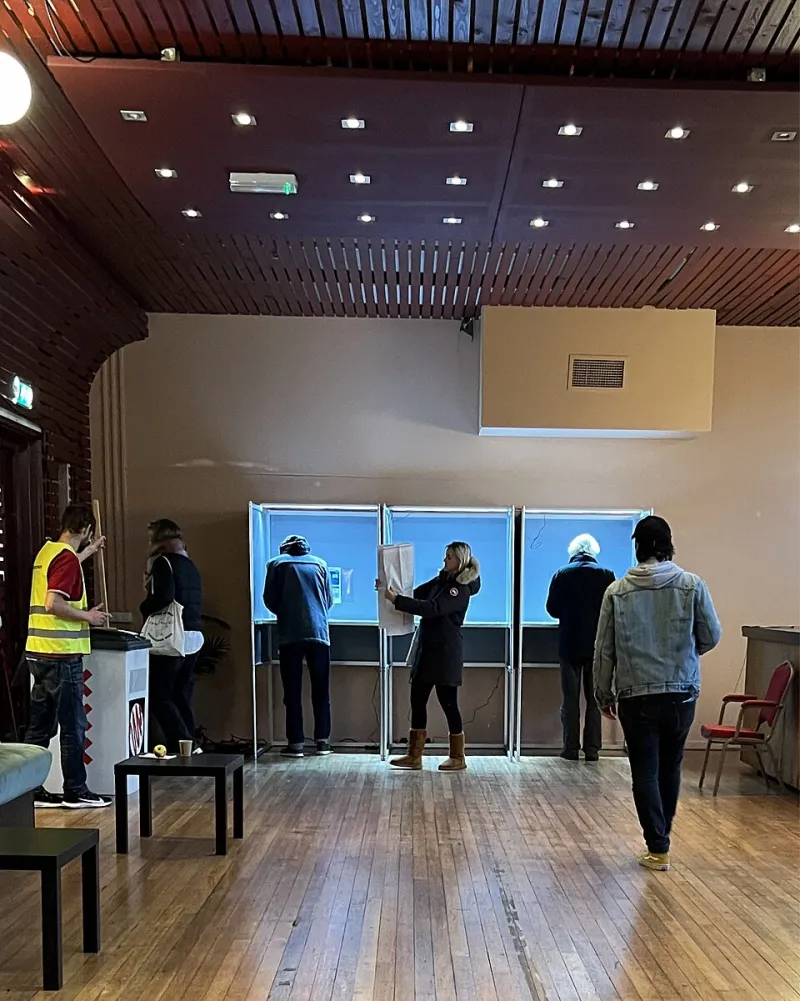
Photo: Milliped, CC BY-SA 4.0, via Wikimedia Commons
There's a long tradition in American politics of the protest vote — the ballot cast not for a candidate but against the entire concept of the candidates available. For most of history, this kind of frustration had no outlet beyond writing in Mickey Mouse or leaving a line blank.
In the early 1990s, a New Hampshire man named Robert Doris decided to be more literal about it. He legally changed his name to None of the Above.
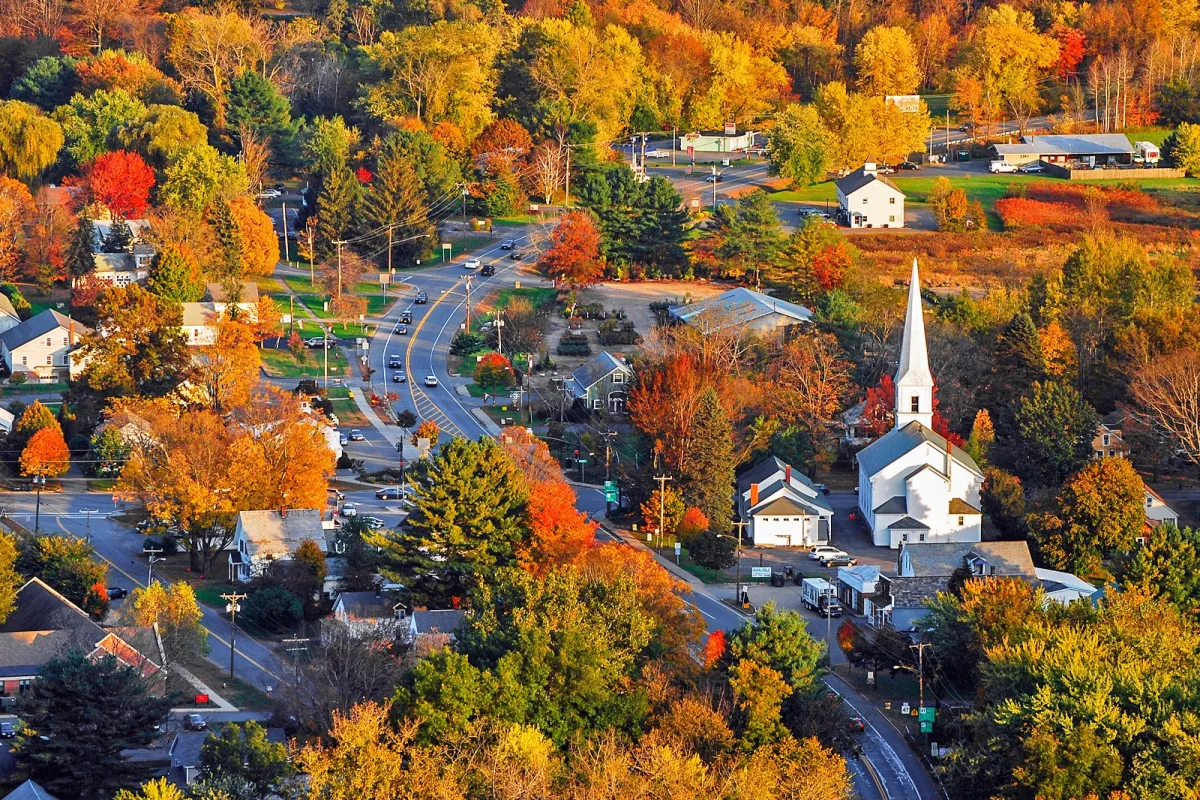 Photo: New Hampshire, via a.cdn-hotels.com
He expected people to laugh. He did not expect to become a recurring electoral problem for the state of New Hampshire.
The Name Change Heard in Concord
Doris — who had worked as a perennial gadfly candidate and political agitator before the name change — filed the paperwork in New Hampshire and walked out of the courthouse with a new legal identity. The move was a pointed commentary on what he saw as a political system full of candidates who offered voters no meaningful choice. If the system was going to offer nothing of substance, he figured, he'd make that nothing official.
New Hampshire, it's worth noting, takes its political identity seriously. It hosts the first presidential primary in the nation and considers civic participation something close to a local religion. The state also has relatively accessible ballot access laws, which meant that a legally named individual called None of the Above could, with enough signatures, appear on an actual ballot.
Which is exactly what happened.
The Ballot Problem Nobody Had Planned For
When None of the Above's name first appeared on a local race ballot, election officials faced a question that no existing New Hampshire law had ever needed to answer: what does a vote for "None of the Above" actually mean?
In Nevada, the state has a formal "None of These Candidates" option on statewide ballots — a recognized protest mechanism that doesn't count toward any actual candidate. But Nevada's version is a printed option, not a human being. New Hampshire had no equivalent provision, and now it had a human being whose legal name was indistinguishable from what a protest voter might write in.
If a voter wrote "None of the Above" on a ballot, were they voting for the man? Were they expressing generic dissatisfaction? Were they accidentally voting for someone they'd never heard of? Election officials genuinely didn't know, and the law didn't tell them.
The problem compounded when None of the Above started pulling real vote totals. In several local races, his vote count was large enough that it couldn't be dismissed as noise. Incumbents who won by comfortable margins found themselves looking over their shoulders at a tally line that represented — something. Protest? An actual candidate? A statistical ghost? Nobody was sure.
The Campaigns That Weren't Quite Campaigns
None of the Above didn't exactly run traditional campaigns. He didn't hold fundraisers or knock on doors in any conventional sense. His candidacy was, by design, a philosophical statement rather than a political operation. But that almost made it more effective as a disruption.
Candidates running against him couldn't attack him. You can't debate a concept. You can't air a negative ad against someone whose entire platform is the absence of a platform. He was protest-vote-proof in both directions — immune to criticism because he never claimed to stand for anything specific, and immune to dismissal because he kept showing up on ballots and collecting votes.
Local incumbents reportedly found his presence genuinely unsettling. A vote total for None of the Above in their race was a public, quantified measure of how many of their constituents would rather vote for a living joke than for them. That number, once printed in the local paper, didn't go away.
The Legal Tangle
New Hampshire's election law eventually had to reckon with the ambiguity None of the Above had created. The core question — whether a write-in vote for "None of the Above" counted as a vote for the candidate or as a spoiled protest ballot — required actual legal clarification, because the answer had real consequences for close races.
The state's resolution was, like most bureaucratic solutions to philosophical problems, somewhat unsatisfying. Officials ultimately ruled that context mattered: if None of the Above was a declared candidate in a given race, votes bearing his name counted for him. If he wasn't on the ballot in a particular contest, the same words constituted an invalid protest vote. This created the genuinely strange situation where the same four words meant different things depending on which race you were looking at.
Legal scholars who've examined the episode point to it as a clean example of how election law tends to be written around the assumption that candidates are distinct from protest mechanisms — and how badly that assumption breaks when someone is both simultaneously.
What the Joke Actually Proved
None of the Above kept his legal name for years after the initial splash, continuing to file for races periodically and continuing to generate the same procedural headaches each time. The story faded from public attention gradually, as these things do, but it left something behind.
The episode exposed a genuine structural gap in how American election law conceptualizes the ballot. The system assumes that a name on a ballot represents a person seeking office, and that a protest vote is expressed through absence — leaving a line blank or writing something clearly invalid. None of the Above broke that assumption by making the protest itself into a candidate.
His vote totals were never large enough to win an election. But they were consistently large enough to matter, and that's the part that sticks. In a country where the margin of victory in local races is often measured in dozens of votes, a man whose name was literally a rejection of the process was pulling numbers that changed outcomes.
Sometimes the most effective political statement isn't a speech or a platform. Sometimes it's a trip to the courthouse and a very specific piece of paperwork.