She Bought a Farmhouse. The Walls Came With a Lawsuit.
A Fixer-Upper With Fine Print
Carol Metzger had done her homework before buying the old Hargrove property outside Bellefonte, Pennsylvania. She'd had it inspected. She'd reviewed the title. She'd walked every inch of the two-acre lot with a surveyor and asked every question a careful buyer should ask.
Nobody mentioned the lawsuit.
To be fair, nobody knew about it. The lawsuit — a boundary dispute filed in 1974 between the then-owner of the property and his neighbor, a man named Gerald Petch — had been technically active in the Centre County court system for decades, frozen in a kind of bureaucratic amber. No resolution. No dismissal. Just an open case file that had outlived both of the men who started it.
And, as Carol discovered in the spring of 2019, a remarkable amount of supporting documentation crammed between the interior wall studs of her dining room.
What the Walls Were Hiding
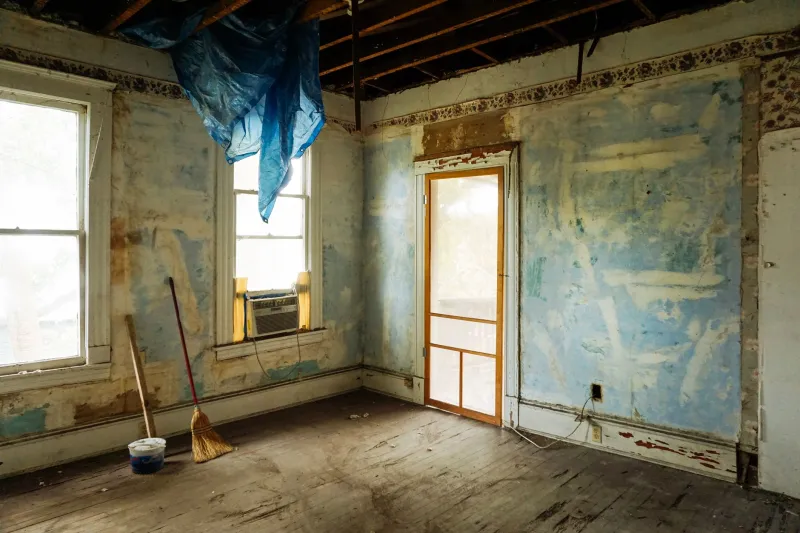
The renovation had been going smoothly by the time her contractor opened up the dining room wall to address a moisture problem near the foundation. What spilled out — literally, in some places — was a dense collection of paper: legal filings, handwritten correspondence, survey maps, carbon copies of letters addressed to attorneys, and what appeared to be several drafts of a strongly worded personal statement that was never sent.
The documents dated from 1974 through approximately 1981, the apparent peak years of whatever feud had consumed the original owner's attention. The dispute, pieced together from the papers, was over a strip of land roughly twelve feet wide running along the eastern edge of the property — a boundary that both neighbors had apparently claimed with the kind of conviction usually reserved for matters of national security.
"It was like finding someone's entire emotional life in a wall," Carol told a local paper at the time. "There were receipts, there were maps, there were letters where he's just — furious. Absolutely furious about twelve feet of grass."
She called the county courthouse, more out of curiosity than anything else.
That call changed everything.
The Case That Wouldn't Die
The clerk who took Carol's call did some digging and came back with news that was equal parts fascinating and alarming: the case, Hargrove v. Petch, was still technically open. It had never been formally dismissed. Both original plaintiffs had died — Hargrove in 1998, Petch in 2006 — but the case had lingered in the system, one of those administrative ghosts that occasionally haunt county courthouses when nobody thinks to close the door behind them.
Under Pennsylvania civil procedure, disturbing physical evidence potentially relevant to an active case — even one this dormant — created a legal obligation to report it to the court. Carol's contractor, who happened to have a brother-in-law in law, flagged this almost immediately.
Carol, who had simply wanted to fix a moisture problem, found herself retaining an attorney.
A Courtroom Dusts Itself Off
What followed was, by every account, one of the stranger legal proceedings in recent Centre County memory. A judge had to be assigned to a case that had been filed when Gerald Ford was president. The estates of both original parties had to be notified. Descendants of both men — most of whom had never heard of the dispute — were contacted and, in several cases, had to hire their own counsel to understand what was happening.
The physical documents Carol had found were authenticated and entered as evidence. A modern survey of the property line was commissioned. The twelve-foot strip of land at the center of the original argument was remeasured with equipment that hadn't existed when the fight began.
The resolution, when it finally came in late 2020, was almost anticlimactic. The strip of land, as the new survey showed, had been partially absorbed into a drainage easement established by the county in the early 1990s — meaning the thing both men had fought over for years had quietly become a non-issue long before either of them died. The case was formally closed, the boundary clarified, and the estate representatives signed off without much fanfare.
The whole affair took about eighteen months and cost Carol, by her estimate, several thousand dollars in legal fees she had absolutely not budgeted for.
The Twelve-Foot Lesson
Carol finished her renovation. The dining room wall went back up, this time without any legal filings inside it. She kept photocopies of the original documents — she found the whole thing too strange not to preserve — and framed one of the original survey maps as a kind of conversation piece.
"People see it and ask about it, and I tell them the story, and they never believe me," she said. "Then I show them the court filing date and they go quiet."
The property is fully hers now, clean title, no litigation lurking in the insulation. But she does admit that before any future renovation project, she plans to knock on the walls first — gently, and with her attorney's number already pulled up on her phone.
The Hargrove property taught her something that no home inspection covers: sometimes the most consequential thing about a house isn't its foundation or its roof or its wiring. Sometimes it's what the previous owner couldn't let go of — and decided to store in the walls instead.