He Dropped His Wedding Ring in Orbit. It Came Back Anyway.
There are certain things you don't expect to lose in space. Your footing. Your nerve, maybe. Your sense of time in the endless dark.
Your wedding ring? That's a new one.
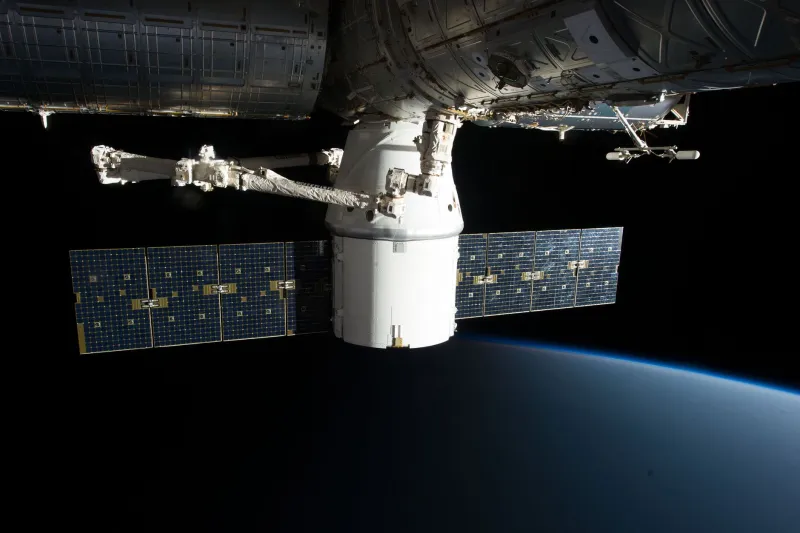
But that's exactly what happened to NASA mission specialist David Holt during a scheduled EVA — extravehicular activity, the clinical term for what is essentially floating outside a metal tube 250 miles above the surface of the Earth. One moment the ring was on his gloved hand. The next, it was gone. Tumbling silently into the black, catching a thin glint of sunlight before disappearing entirely.
And then, against every reasonable expectation, it came back.
The Worst Possible Place to Lose Something Small
Spacewalk protocols are meticulous for exactly this reason. Tools are tethered. Equipment is accounted for. Astronauts train for months to handle objects in the frictionless chaos of microgravity. But personal items — the ones you don't think of as mission-critical — sometimes slip through the cracks. Literally.
Holt had worn a thin titanium band throughout his training cycle without issue. Titanium was approved. It was lightweight, non-magnetic, and about as low-risk as jewelry gets. What nobody accounted for was the way pressurized gloves interact with ring-sized objects during a grip adjustment. One small flex of the fingers, one moment of inattention, and the ring slid free.
It didn't fall. Things don't fall in orbit — they orbit. The ring, now a tiny piece of untracked debris, began its own independent journey around the planet at roughly 17,500 miles per hour.
Holt didn't report it immediately. There was a spacewalk to finish. But back inside the station, he told his crew. The story spread the way strange stories do in enclosed spaces: quickly, and with a lot of dark humor.
"It's technically still circling the Earth," one crewmate reportedly told him. "So in a way, you're still wearing it."
The Math Nobody Wanted to Do
Here's the thing about objects in low Earth orbit: they don't stay there forever. Atmospheric drag — even the whisper-thin atmosphere at 250 miles altitude — gradually pulls debris inward. Over months or years, depending on size, mass, and orbital inclination, objects spiral downward and re-enter the atmosphere.
Most of them burn up completely. A titanium ring, roughly 6 grams and about 20 millimeters in diameter, should have incinerated without a trace.
Should have.
Titanium has an exceptionally high melting point — around 3,000 degrees Fahrenheit. Re-entry generates intense heat, but the duration of that heat exposure depends on the angle and speed of descent. Small, dense objects with favorable geometry can, in rare circumstances, survive re-entry partially or even fully intact. It's unusual. It's not impossible.
NASA's orbital debris tracking program, which monitors thousands of objects larger than a softball, had no record of Holt's ring. It was too small to track. So nobody knew where it went. Nobody knew when it came down.
Until a farmer in Rooks County, Kansas found something strange in his field.
A Wheat Field in the Middle of Nowhere
Gerald Purcell had farmed the same 400 acres outside Stockton, Kansas for most of his adult life. He knew every inch of that land the way farmers do — not romantically, but practically. He knew where the soil ran thin, where the drainage pooled after heavy rain, and where the occasional piece of equipment came to die.
He did not expect to find a small metal ring half-buried in the dirt near the eastern fence line.
It was scratched. Heat-discolored along one edge, with a faint iridescent shimmer that didn't look quite like anything Purcell had seen on earthly jewelry. He brought it home, set it on the kitchen windowsill, and forgot about it for two years.
It was his daughter who eventually looked it up. The discoloration, the metal composition, the slight warping on one side — she'd been reading about meteorite hunters and space debris recovery, the kind of niche internet rabbit hole that occasionally produces something genuinely useful. She sent photos to a materials analysis group.
The results came back: titanium, consistent with aerospace-grade alloy. Heat exposure consistent with atmospheric re-entry. Estimated ground impact within a window of years that matched Holt's mission timeline.
Somebody called NASA. NASA called Holt.
The Part That Doesn't Make Sense (Except It Does)
The probability of any of this happening is staggering. A ring-sized object surviving re-entry. Landing on solid ground instead of ocean — which covers 71 percent of the planet. Landing in an inhabited, actively farmed area where someone would actually find it. Being recognized for what it was. Making its way back to its owner.
Each step in that chain is improbable. Together, they're almost offensive to the concept of statistics.
And yet.
Holt, by all accounts, is not a particularly mystical person. He's an engineer. He thinks in systems and tolerances. But when asked about the ring's return, he reportedly said something that stuck: "The universe is big enough that almost nothing should happen. It's also big enough that almost everything eventually does."
He wears the ring again now. The heat discoloration is still there — a thin, iridescent stripe along one side that wasn't there before. His wife, for the record, said she preferred it that way.
Something about a ring that traveled 17,500 miles per hour, survived a fireball, and found its way home feels like it deserves a mark.
She's not wrong.