She Ran a Mile Women Weren't Allowed to Run — Then Changed Everything
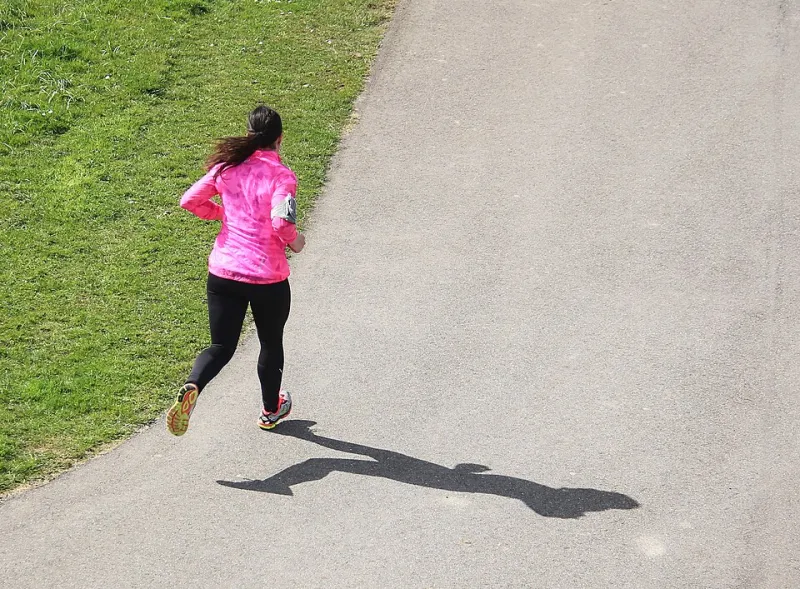
Photo: Peter van der Sluijs, CC BY-SA 3.0, via Wikimedia Commons
Picture this: it's before sunrise somewhere in the American Northeast, the streets are empty, and a woman in running shoes is moving through the predawn dark at a pace that would embarrass most men. She has no race number. No official timer. No permission. What she's doing isn't just unusual — by the rules of organized athletics at the time, it's explicitly prohibited.
And what she's about to accomplish will quietly rewrite the rulebook for every woman who runs after her.
The Rule That Sounds Like a Joke (But Wasn't)
To understand why this moment matters, you have to understand how bizarre the official position on women and distance running was in the mid-20th century.
For decades, amateur athletic governing bodies in the United States and internationally operated under the assumption — stated with complete medical seriousness — that women's bodies were not built for sustained running. The concern wasn't performance. It was physiology. Officials genuinely believed, and in some cases publicly argued, that distance running posed a health risk to women. That it might damage reproductive organs. That it could cause psychological harm from overexertion.
None of this was based on rigorous science. Most of it was based on nothing at all. But it had the force of institutional policy, which in the world of organized athletics is essentially the same as law.
The Amateur Athletic Union, which governed track and field competition in the U.S. for much of the 20th century, restricted women's race distances to a maximum of 1.5 miles for years. The Boston Marathon, arguably the most iconic road race in American culture, didn't officially allow women to enter until 1972. Before that, women who wanted to run it had to do so unofficially — without a race number, without a recorded time, sometimes running alongside official participants who hadn't invited them.
Before Dawn, Before Permission
Into this landscape stepped a handful of women who decided the rules were wrong and ran anyway.
Among the most documented of these early rule-breakers is Lyn Carman, who in the early 1960s became one of the first American women to run a marathon distance — 26.2 miles — at a time when women weren't permitted to compete at anything close to that length in sanctioned events. She did it on public roads, without official sanction, often in the early morning hours when there were fewer people around to object.
Her times, recorded by training partners with handheld stopwatches, were legitimate. Her effort was real. Her achievement, by any reasonable standard, was historic. And for years, it was almost entirely ignored by the institutions that controlled competitive running.
Carman wasn't alone. Merry Lepper and Lyn Carman ran the 1963 Western Hemisphere Marathon together — an unsanctioned entry that forced race officials into the awkward position of trying to physically remove them from the course. The officials failed. Both women finished.
The Institutional Pushback Was Spectacular
What makes this story genuinely strange — beyond the obvious absurdity of the underlying restrictions — is how hard athletic institutions fought to maintain them even as the evidence against their position mounted.
When women began appearing at distance events uninvited, the response from governing bodies wasn't to reconsider the rules. It was to dig in. Officials argued that allowing women to run marathons would set a dangerous precedent. Some suggested it would devalue men's athletic achievement. Others retreated to the physiology argument, citing studies that were, to put it charitably, not peer-reviewed.
The most famous confrontation came at the 1967 Boston Marathon, when Kathrine Switzer registered using her initials — K.V. Switzer — and ran with an official number. When a race official named Jock Semple spotted her mid-race and attempted to physically pull her off the course, her boyfriend intervened by blocking Semple with a shoulder check. Switzer finished the race. The photograph of Semple grabbing at her became one of the most reproduced images in American sports history.
That image did something that years of argument hadn't quite managed: it made the opposition look exactly as absurd as it was.
The Slow Collapse of a Ridiculous Policy
Change didn't come overnight. It rarely does when institutions have spent decades building policy around a bad idea.
But the women who ran illegally, who registered under initials, who showed up at dawn on empty roads with stopwatches and training partners, were accumulating a body of evidence that was impossible to ignore indefinitely. They weren't collapsing. They weren't being harmed. They were running extraordinary distances and finishing upright and going home and running again the next morning.
The AAU began loosening restrictions on women's distance events through the late 1960s and early 1970s. Boston officially opened to women in 1972. The women's marathon was added to the Olympic program in 1984 — an almost inconceivably late date, but a date that arrived in part because women had spent two decades proving the case with their feet.
What the Empty Roads Proved
The women who ran before they were allowed to run were doing something more than training. They were conducting an experiment with a sample size of one, repeated hundreds of times, that consistently returned the same result: nothing bad happened. Women ran long distances. Women finished. Women were fine.
The institutions that spent decades insisting otherwise weren't protecting women's health. They were protecting an idea about what women could do — an idea that collapsed the moment enough women decided not to ask for permission.
She ran before sunrise. She ran without a number. She ran a distance she wasn't supposed to be able to handle.
She was right. They were wrong. And the roads she ran on are now full of women proving it every single day.