He Never Saw the Cathedral He Built — And It's Still Standing 800 Years Later
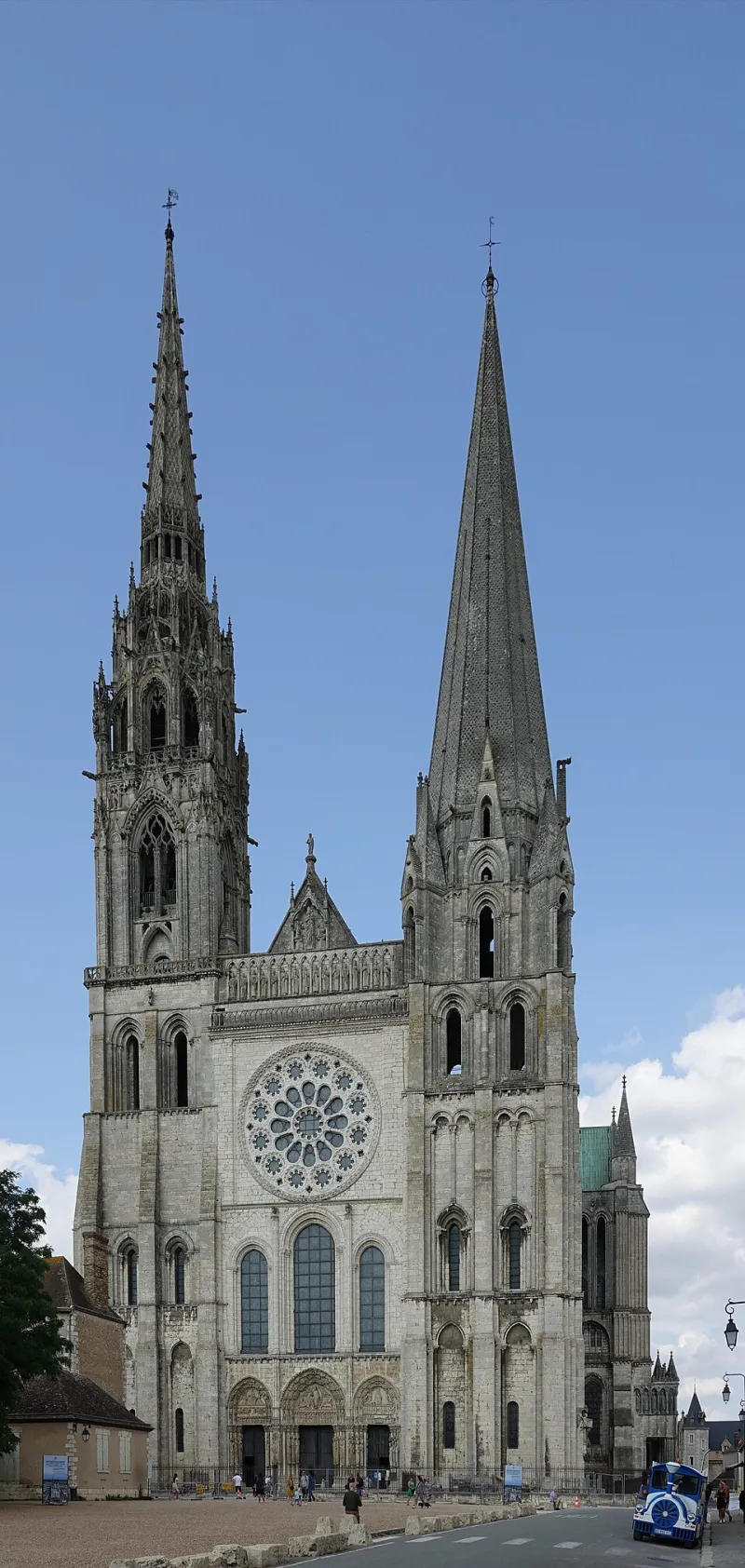
Photo: Gzen92, CC BY-SA 4.0, via Wikimedia Commons
Here's a sentence that should not make sense: a blind man built one of the most structurally complex stone buildings of the medieval era — without blueprints, without sight, and without any of the tools we'd consider essential to the job. And the building didn't just survive. It thrived. Eight centuries later, structural engineers are still trying to fully explain how.
This isn't legend. This isn't medieval mythology dressed up as history. The documentary record, fragmentary as it is, points to a real person who did something that, by every modern assumption about perception and craft, should have been impossible.
The Man Behind the Stones
The stonemason in question is believed to be associated with construction work on a major Gothic cathedral in 13th-century France — a period when cathedral building was essentially the space program of its day. These weren't just churches. They were engineering statements, political declarations, and acts of theological ambition all poured into limestone and mortar.
Medieval guild records, which historians have been painstakingly cross-referencing since the 19th century, contain references to a master mason who continued supervising construction after losing his vision — likely from an accident involving stone dust, a tragically common occupational hazard of the era. What's remarkable isn't just that he kept working. It's that the sections of the structure completed under his supervision are, by measurable architectural standards, among the most precisely executed.
The flying buttresses — those iconic arched supports that allow Gothic walls to soar improbably high — align with a geometric accuracy that puzzled architectural historians when they first ran modern surveys of the building. The load distribution across the nave is, in the words of one structural analysis conducted in the 1990s, "almost suspiciously optimal." The word suspiciously is doing a lot of work in that sentence.
Touch, Memory, and a Different Kind of Seeing
So how do you build something you cannot see?
The answer, historians now believe, lies in a combination of tactile mastery, spatial memory, and a system of communication that medieval craftsmen had developed over generations but rarely needed to rely on so completely.
Master masons of the Gothic period worked from templates — physical wooden or metal forms that defined the curves and angles of each carved element. A blind mason could feel whether a cut matched its template. He could run his hands along a joint and know, from decades of muscle memory, whether the mortar line was true. He could pace a floor plan and understand its proportions in a way that was entirely independent of vision.
There's also the matter of trust. A master mason didn't personally cut every stone. He directed. He corrected. He approved or rejected work based on information relayed to him by apprentices and journeymen whose eyes he had trained. In a very real sense, he saw through other people — and those people had been taught to see the way he saw.
Modern neuroscience offers a fascinating footnote here. Studies on individuals who lose sight after years of visual experience show that spatial reasoning and geometric intuition don't simply vanish. In many cases, they sharpen. The brain, deprived of incoming visual data, leans harder on stored geometric models. A master mason who had spent thirty years internalizing the logic of stone and load and curve might, in some measurable cognitive sense, have better spatial architecture in his mind after losing his sight than a sighted apprentice who'd been on the job for three years.
The Part That Still Baffles Engineers
Here's where the story gets genuinely strange.
When researchers conducted a detailed structural analysis of the cathedral in the late 20th century, they discovered something unexpected in the sections attributed to the blind mason's tenure. The tolerances — the margin of error between intended and actual dimensions — were tighter in those sections than in the work completed before his vision loss.
Let that sit for a moment. The blind guy built it more accurately.
One theory is that the loss of sight forced a slowdown. Without the ability to do a quick visual check, every measurement had to be confirmed physically, every angle verified by template rather than eyeball. The result was a kind of enforced rigor that sighted workers, trusting their eyes when they perhaps shouldn't have, didn't always apply.
Another theory is simpler: by the time he lost his sight, he was simply the best mason on the project, and the work reflects that, full stop.
What This Says About What We Think We Know
There's a broader point lurking in this story, and it's one that tends to make people uncomfortable.
We have a deep cultural assumption that certain kinds of work require certain kinds of perception. You need eyes to build something visual. You need hearing to make music. You need physical sensation to practice surgery. And while those assumptions aren't wrong exactly, this story is a useful reminder of how incomplete they are.
The blind mason didn't overcome his disability by pretending it wasn't there. He overcame it by building a system — a network of trained eyes, physical templates, and embodied knowledge — that made his particular form of perception not just adequate, but in some ways superior to the alternative.
The cathedral is still there. Still standing. Still structurally sound in ways that continue to generate academic papers.
He never saw it. But in every sense that actually matters, he understood it better than almost anyone who ever walked through its doors.