Your Honor, the Defendant Is Omnipotent: The Strange Legal History of Suing the Almighty
Most lawsuits begin with a name, an address, and a list of grievances. What happens when the defendant created the universe and doesn't technically have a zip code? That question sat on actual judges' desks more than once in American legal history — and the answers were stranger than anything a law school professor would dare put on an exam.
The Case That Started It All
Most people remember 2007, when Nebraska State Senator Ernie Chambers filed a lawsuit against God in Douglas County District Court. The stunt was deliberate — Chambers wanted to make a point about the absurdity of frivolous litigation and the court's open-door policy. It became a minor media sensation. Judges ruled the case couldn't proceed because God had no known address and therefore could not be properly served.
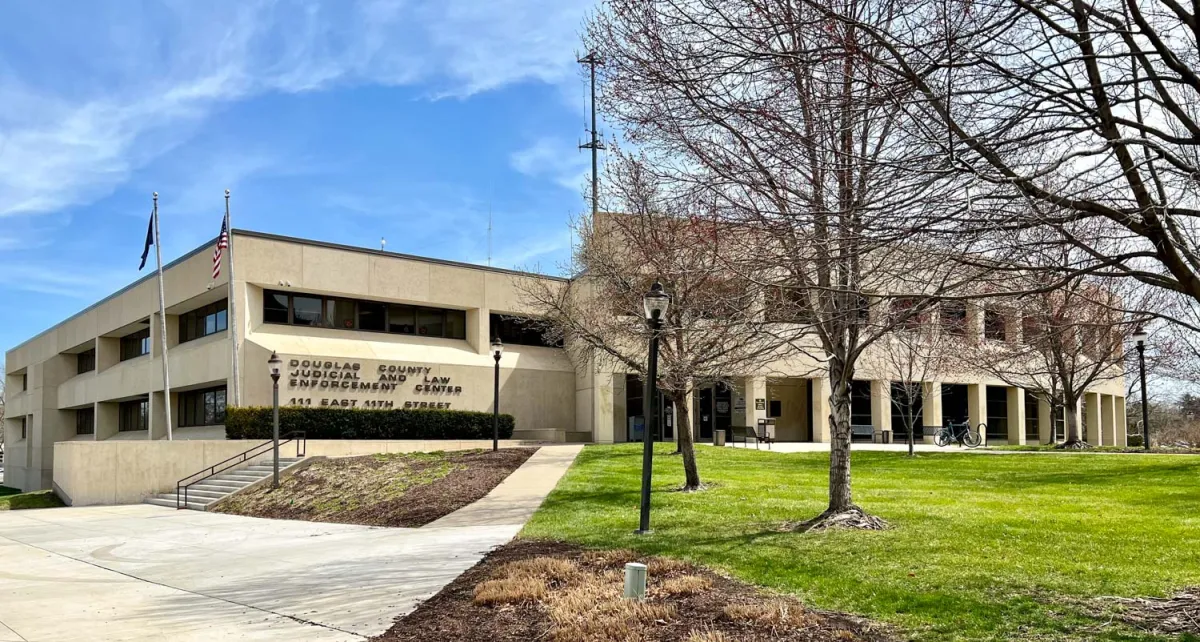 Photo: Douglas County District Court, via lawrencekstimes.com
What almost nobody remembers is that decades earlier, a Pennsylvania man filed a nearly identical action — and a judge didn't immediately throw it out. He scheduled a hearing.
The Pennsylvania case involved a man who filed suit claiming divine negligence, essentially arguing that God had failed in a duty of care that resulted in personal suffering and loss. The specifics of his grievance were almost secondary to the procedural nightmare that followed. A court clerk accepted the filing. A docket number was assigned. And then a judge had to sit down and figure out what, exactly, to do with a summons addressed to the Creator of All Things.
The Paperwork Problem
Here's where American jurisprudence starts to quietly unravel. Courts operate on procedure. There are rules for everything — how documents are formatted, how defendants are notified, how hearings are scheduled. Those rules assume the defendant is a person, a corporation, or at minimum an entity with some kind of legal standing and a mailing address.
God has none of these things. Officially.
The court was left wrestling with genuinely absurd questions. Could a sheriff's deputy serve papers on a being described as omnipresent? If God is everywhere simultaneously, does that count as being served? If the defendant fails to appear, can you enter a default judgment against the Almighty? And perhaps most critically — who exactly would write the check if the plaintiff won?
The judge who drew the short straw on the Pennsylvania case reportedly spent more time than he would ever publicly admit trying to determine whether the filing had any procedural merit before the whole thing collapsed under its own theological weight. The case was eventually dismissed, but not before it generated paperwork that courthouse staff apparently talked about for years.
This Has Happened More Than Once
The Pennsylvania filing wasn't an isolated incident. American legal history has a surprisingly robust collection of cases where individuals attempted to name God, the Devil, or various divine and supernatural entities as defendants. A Romanian man sued God in 2005 for failing to honor his baptismal contract. An Indian court received a similar filing around the same period. In each instance, courts were forced to engage — however briefly — with the question of divine legal standing.
What makes the American cases particularly interesting is what they accidentally revealed about the limits of the legal system. Courts are designed to handle disputes between parties who exist within a defined legal framework. The moment you introduce a defendant who operates outside that framework entirely, the whole machine starts grinding.
The Chambers case in Nebraska ended with a ruling that became unintentionally philosophical: the court couldn't proceed because it had no way to notify the defendant. The implication being that if God did have a verifiable address, the case might have moved forward. Which raises the question of whether the court was declining to hear the case on theological grounds or purely logistical ones. The judge, to his credit, kept a completely straight face.
What the Courts Were Really Saying
Legal scholars who've studied these cases point out something genuinely interesting beneath the obvious absurdity. When courts dismiss suits against God on the grounds that the defendant cannot be served, they are making a procedural ruling, not a theological one. The court is not saying God doesn't exist. It's saying God doesn't have a registered agent.
That distinction matters more than it sounds. American courts are famously reluctant to make statements that touch on religious belief. By framing dismissals in procedural terms — no address, no service, no case — judges found a way to handle inherently ridiculous filings without accidentally issuing an opinion on the existence of the divine. It was, in its way, a small masterpiece of judicial restraint.
The Pennsylvania case added one extra wrinkle. By actually scheduling a hearing before dismissing the suit, the court created a brief, surreal window where God was technically a named defendant with a court date. Whatever the judge's reasoning for letting it get that far, he produced something truly remarkable: an official court calendar that listed the Almighty as a no-show.
The Strangest Thing About All of This
The strangest part isn't that people filed these lawsuits. Humans have been arguing with God since long before there were courts to do it in. The strangest part is how seriously the legal system had to treat them, even momentarily.
A court clerk who accepts a filing isn't making a judgment about its merit. They're following procedure. A judge who schedules a hearing isn't endorsing the plaintiff's theology. They're working through a process. And somewhere in that process, the full weight of American jurisprudence — centuries of legal tradition, thousands of pages of procedure — briefly pointed itself at a defendant who, depending on your beliefs, either doesn't exist or was watching the whole thing with considerable amusement.
Either way, the paperwork exists. Somewhere in a Pennsylvania courthouse archive, there is a legal filing with God listed as the defendant. The case was dismissed. But the docket number is real.