The Logician Who Technically Proved He Wasn't Real — and Still Got the Job
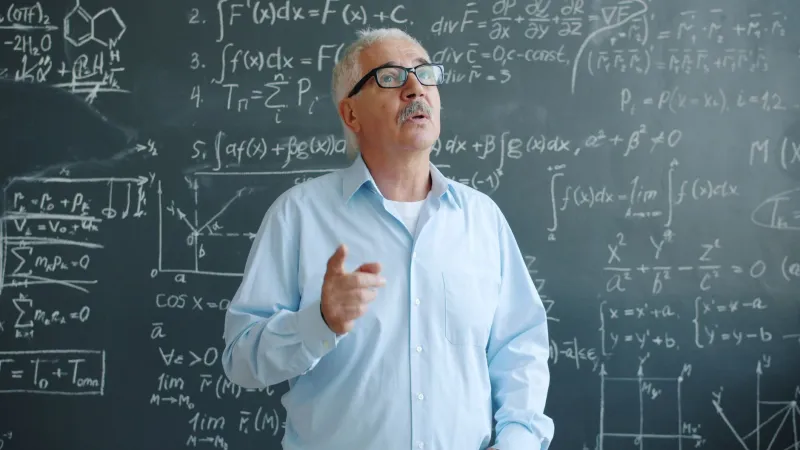
Most job applicants try to prove they're qualified. Imre Varga, a Hungarian-born logician working in the United States in the mid-1970s, tried something different. He submitted a formal mathematical proof to the hiring committee of a midwestern research university arguing that, by the university's own published definitions, he did not exist as a hirable entity. The committee spent three weeks trying to find the flaw in his reasoning. They couldn't. So they hired him.
The story sounds like a punchline. It wasn't.
The Setup: When Bureaucracy Meets Set Theory
In 1974, Varga applied for a position in the mathematics department of a mid-sized university in Ohio — the institution's name has been kept deliberately vague in the academic papers that later referenced the incident, though a handful of math historians believe they know which school it was. The university had recently overhauled its faculty hiring criteria, adopting a dense, formally worded document intended to standardize qualifications across all departments.
The document, written by a committee of administrators with only passing familiarity with formal logic, contained a definition of "qualified applicant" that relied on a self-referential clause. In plain English, it essentially stated that a qualified applicant was one who met all criteria not met by unqualified applicants — a definition that, when parsed with any rigor, collapsed into a version of Russell's Paradox.
Russell's Paradox, for those who skipped that particular week in philosophy class, is the classic logical puzzle about the set of all sets that don't contain themselves. Does that set contain itself? If it does, it shouldn't. If it doesn't, it should. The result is a logical loop with no clean exit. Bertrand Russell identified it in 1901 and it caused genuine chaos in the foundations of mathematics for years afterward. Varga recognized the same structure hiding inside the university's HR paperwork.
The Proof
Rather than simply filling out the standard application forms, Varga submitted a twelve-page formal proof as an appendix to his application materials. The proof walked step by step through the university's own language, demonstrating that under the document's stated definitions, no applicant could simultaneously satisfy all the conditions required to be considered "qualified." The criteria were self-defeating. They described a category that, logically speaking, could contain no members.
His conclusion, written in the dry, affectless style of academic mathematics: "Therefore, the undersigned applicant does not exist as a qualified candidate within the operational definitions provided by this institution. As the institution cannot hire a non-existent entity, and as the institution has advertised a position requiring a qualified candidate, the position itself cannot be filled under current definitional constraints. The author submits this proof not as a rejection of employment, but as a service to the committee, and remains available for interview at the committee's convenience."
He then listed his office phone number.
The Committee's Problem
The hiring committee, by all accounts, was not amused at first. The department chair reportedly passed the document around as a curiosity, assuming it was some kind of elaborate academic joke. But two members of the committee — both with backgrounds in formal logic — read it carefully and came back with bad news: the proof was valid.
The university's legal office was consulted. Then an external consultant. Then, apparently, someone called a colleague at a law school who specialized in contract language. The consensus was uncomfortable but clear: the hiring criteria document, as written, was logically incoherent. Varga hadn't fabricated a problem. He'd found one that was genuinely there.
The institution faced an odd dilemma. Rejecting Varga meant implicitly accepting that their criteria worked — which the proof demonstrated they did not. Ignoring the proof entirely opened the university to a different kind of embarrassment if the story became public. And rewriting the criteria mid-process raised its own procedural complications.
The path of least resistance, it turned out, was simply hiring him.
What Actually Happened Next
Varga joined the department that fall and, by most accounts, was a perfectly ordinary faculty member for the next two decades. He taught undergraduate logic, published a respectable number of papers, and served on exactly the kinds of tedious committees that all junior faculty are assigned to. He never publicly claimed credit for the hiring stunt, though colleagues say he kept a framed copy of the twelve-page proof on his office wall.
The university quietly rewrote its hiring criteria the following year. The new document was reviewed by two members of the mathematics department before being finalized — a precaution, one imagines, born of hard experience.
Why This Story Still Matters
There's something genuinely wonderful about this episode that goes beyond the comedy of it. Varga didn't cheat the system. He didn't lie on his application or pull strings or exploit a loophole in any conventional sense. He just read the rules more carefully than the people who wrote them — and then did what any rigorous logician would do. He showed his work.
The paradox he exploited wasn't invented. It was inherited from one of the most important intellectual crises in the history of mathematics. Russell's Paradox shook the foundations of set theory and forced an entire generation of mathematicians to rethink what they meant by basic concepts like "set" and "membership." Varga simply noticed that the same fragile thinking had wandered into an HR document in Ohio.
It's a reminder that formal language is hard — genuinely hard — and that the gap between what we mean and what we actually write is sometimes large enough to drive a logician through.
Or, in this case, to drive one straight into a tenured position.