The Time Zone That Exists on Paper, Has Never Been Used, and Technically Still Applies to One Very Confused Midwestern Town
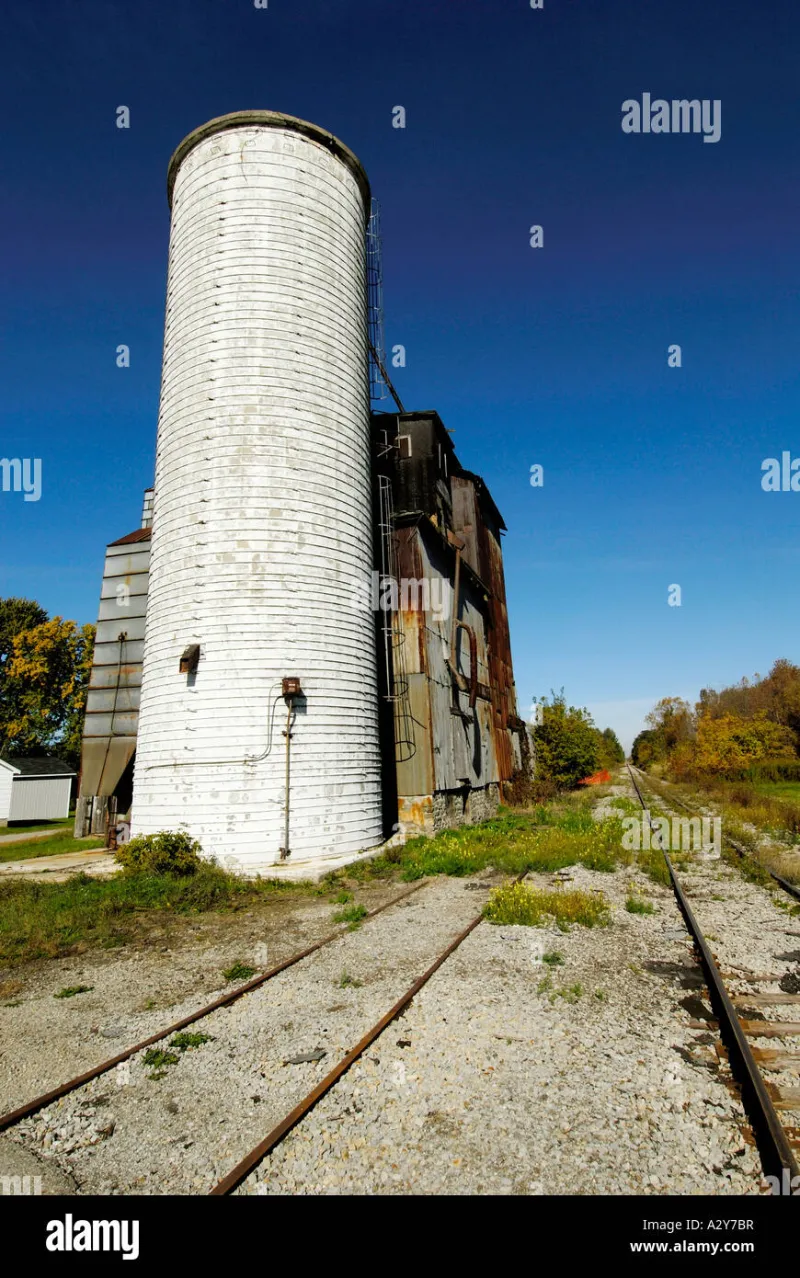
Photo: small midwestern town grain elevator rural America vintage, via c8.alamy.com
Time, As It Turns Out, Is Negotiable
Most Americans think of time zones as fixed, logical things — broad bands drawn across the country by sensible people with rulers and atlases. Central Time ends here. Eastern Time begins there. Everyone agrees, everyone adjusts their clocks, and the whole system hums along without much drama.
Most Americans have not heard about the small Midwestern municipality that Congress quietly handed its own official time zone designation in 1947 as part of a postal reform experiment so obscure that even the people it was supposed to affect had no idea it had happened. And then just... kept ignoring it for the next several decades.
The designation still exists. The town has never used it. Not once.
The Postal Reform Nobody Remembers
To understand how a single town ends up with its own time zone, you have to understand how genuinely strange federal bureaucracy could get in the years immediately following World War II.
The late 1940s were a period of aggressive administrative reorganization across the federal government. Agencies that had operated on wartime emergency logic were being retooled for peacetime, and a number of congressional committees were actively looking for ways to modernize infrastructure systems that had grown haphazardly over the previous century. One of those systems was the rural postal network.
In 1947, a now-largely-forgotten postal reform bill included a provision — buried deep enough in the text that most of the legislators who voted for it probably never read it — establishing a framework for what were called "postal time anchors." The idea, as best as historians have been able to reconstruct it, was to create a handful of official time reference points in rural areas where mail routing schedules were frequently disrupted by the fact that local communities observed time inconsistently.
In practice, this meant granting a small number of municipalities their own official federal time designations, which would serve as reference points for sorting and delivery schedules regardless of what the surrounding region did with its clocks.
One of those municipalities was a small farming community in the rural Midwest — a town of a few hundred people whose main distinguishing features were a grain elevator, a post office, and a location at a geographic point that the bill's authors apparently considered strategically significant for mail routing purposes.
The Town That Shrugged
Here is the part that makes this story genuinely remarkable: nobody told the town.
Or rather, the federal notification was sent to the local postmaster, who filed it, mentioned it to approximately no one, and continued operating on the same informal timekeeping the community had used for years — which was, by most accounts, a loose interpretation of Central Time adjusted seasonally by local consensus.
The town's residents did not adjust their clocks. The local businesses did not change their hours. The school did not modify its bell schedule. Life continued exactly as it had before, because as far as anyone in that town was concerned, nothing had changed. They had not asked for their own time zone. They did not want one. And in the absence of any enforcement mechanism — because the federal government had not actually created one — there was nothing compelling them to observe it.
The designated time offset, which placed the town a fractional increment off from the surrounding region's standard time, existed purely on paper. It was referenced in federal postal routing documents through the early 1950s before those documents were updated and the designation was effectively orphaned — still technically valid, never practically applied.
Why It Still Exists
Federal designations, once created by an act of Congress, have a peculiar tendency to persist. Repealing them requires affirmative legislative action, which requires someone to notice they exist, which requires someone to care enough to go looking.
Nobody has gone looking.
Researchers who have examined the original 1947 postal reform legislation confirm that the time designations created under it were never formally rescinded. They were simply abandoned — left in place like furniture in a house nobody lives in anymore. The specific designation for this Midwestern town sits in federal records the way a lot of things sit in federal records: technically current, practically invisible, waiting for someone to ask the right question.
When a regional newspaper ran a brief item on the designation in the early 1990s, the town's then-mayor reportedly responded that he had no idea what a postal time anchor was and that everyone in town set their clocks to whatever the radio said, which seemed to be working fine.
What This Says About How We Govern Time
There is something genuinely funny about the image of Congress solemnly granting a small farming community its own time zone while the farmers in question continue setting their watches by the morning farm report and the angle of the sun.
But the story also points to something real about how bureaucratic systems work — or don't. Legislation gets written, provisions get buried, designations get created, and then the actual humans the legislation was meant to affect simply continue living their lives in whatever way makes sense to them.
The time zone exists. The town ignores it. The federal records sit in an archive somewhere, patient and unhurried, keeping perfect time that nobody is observing.
Somewhere in rural America, it is simultaneously whatever time the locals say it is and a slightly different time that Congress decided on in 1947. Both of those things are technically true. Only one of them matters to the people who live there.