The Bog That Got Hit by a Meteorite and Called It a Favor
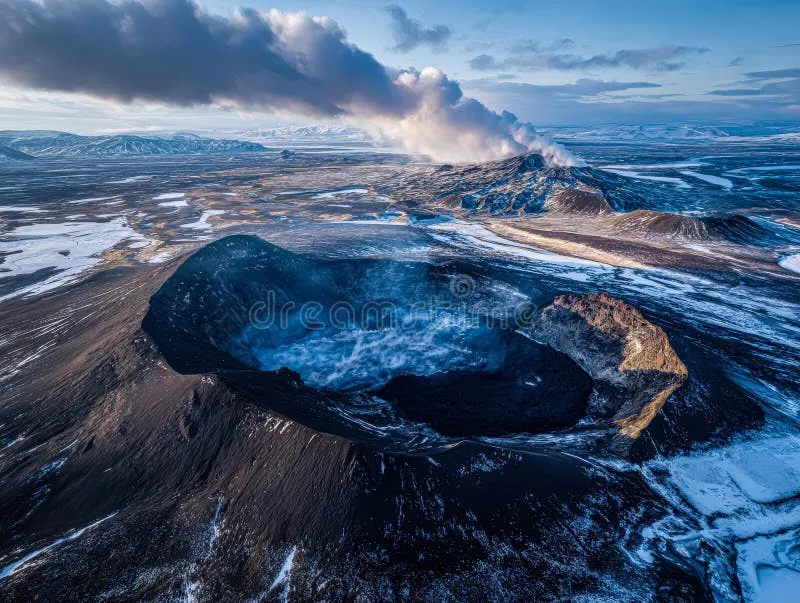
Photo: meteorite crater smoky wetland bog landscape, via thumbs.dreamstime.com
Meteorites have a reputation, and it's not a good one. They're blamed for extinctions, panic, and at least one famously dented car in Peekskill, New York. They are, in the public imagination, the universe's way of starting fires.
Which is why one of the strangest stories in fire-and-space lore reads like a typo: a meteorite that put out a fire.
The Setup: Peat Bogs Are Fire's Favorite Slow Disaster
To understand the story, you need to understand peat. Peat bogs are essentially thousands of years of compacted, half-rotted plant matter — spongy, carbon-rich ground that can smolder underground for months without a visible flame. Firefighters call peat fires "the fire that eats the ground," and they're a nightmare: you can't spray water on dirt that's burning eight feet down. Quebec's vast bogs have hosted such smolderers for centuries.
Now imagine a bog doing what bogs do — quietly burning itself into charcoal — when a several-pound rock arrives from orbit at hypersonic speed.
The Impact
According to accounts tied to a 1972 event in Quebec, that's precisely what happened. A meteorite — a stony space rock that had survived its plunge through the atmosphere — slammed into the landscape and, by remarkable chance, into a peat bog that had been burning. The impact didn't spark a wildfire, as everyone's instincts would predict. Instead, the rock blasted a crater into the wet, waterlogged peat, collapsing saturated muck inward and effectively burying the smoldering zone under a thick, airless seal of mud and water.
Fires need oxygen. The meteorite, in the most violent way imaginable, removed it.
The smoking bog went out. The space rock, in effect, performed emergency firefighting via controlled demolition.
How Likely Is That, Actually?
Let's put some numbers on the absurdity, because that's where the story earns its place in the coincidence hall of fame.
Roughly 70 percent of Earth's surface is water, and the vast majority of land is not on fire at any given moment. The odds of a random meteorite striking a burning patch of ground are so small that researchers who catalog meteorite falls have essentially never recorded it. Meteorites famously hit cars, mailboxes, and — in one 1954 Alabama case — a woman named Ann Hodges, who remains the only confirmed human struck by a meteorite. But a meteorite striking the one square meter of landscape that happens to be on fire? That's the cosmic equivalent of threading a needle while the needle is also on fire.
And yet the physics of it isn't mysterious at all. A high-velocity impact into waterlogged peat behaves like the world's most aggressive fire suppression system: displacement, burial, oxygen exclusion. If you'd designed a machine to extinguish a peat fire, you'd struggle to build something better than a rock arriving at 200 miles per hour with several tons of kinetic energy.
Physics Taking Sides
The Quebec bog isn't alone in the category of natural interventions that seem suspiciously convenient. During the 1906 San Francisco earthquake, one of the few structures left standing on its street was a firehouse — whose firefighters then fought the fires. In 2013, a lightning strike in a Florida town knocked down a power line that, in the chaos, severed and dropped onto a house fire's fuel source. And WWII bomb-disposal stories are full of ordnance landing in exactly the wrong place until, occasionally, it landed in exactly the right one.
Scientists would rightly caution that this is survivorship bias: a million meteorites have fallen without doing anyone a favor, and we only hear about the ones that land in stories. That's true. It's also true that for one smoldering bog in Quebec, the universe looked down, did the math, and apparently decided to help.
The bog, for the record, reportedly never caught fire again. Hard to blame it. It had already survived the worst — and the best — that the sky could throw at it.