Last Call for the National Anthem: How a Notorious Drinking Song Conquered American Patriotism
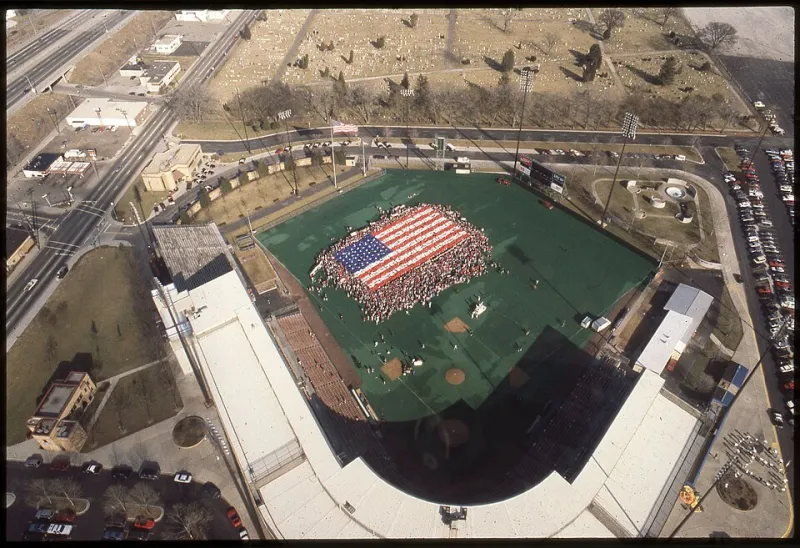
Photo: David E. Lucas, Public domain, via Wikimedia Commons
Every fall Sunday, millions of Americans stand in football stadiums, hands over hearts, attempting to sing a song that professional vocal coaches have described as genuinely dangerous for the untrained human throat. The high note in "the land of the free" — a soaring, technically demanding leap that has publicly humbled everyone from pop stars to opera singers — was not written with patriotism in mind. It was written so that drunk British gentlemen could show off at parties.
The full story of how "The Star-Spangled Banner" got from a London drinking club to American sports arenas is so strange, so accidental, and so thoroughly unplanned that it's a miracle anyone sings it with a straight face.
The Drinking Society That Started Everything
The melody now known as "The Star-Spangled Banner" began its life as "To Anacreon in Heaven," a song written in the 1770s for the Anacreontic Society — a London gentlemen's club whose members were enthusiastic amateur musicians and, by most historical accounts, equally enthusiastic drinkers. The song was their official anthem, performed at the start of club meetings as a kind of musical handshake.
Anacreon was an ancient Greek poet associated with wine and pleasure, which tells you everything you need to know about the club's priorities. The song's melody was deliberately constructed to be vocally demanding — the wide range and awkward intervals were a feature, not a bug. Members were expected to demonstrate their musical chops by actually singing the thing. If you couldn't hit the notes, you hadn't practiced enough.
The tune became popular enough that it crossed the Atlantic, where American poets and lyricists used it as a template for new songs throughout the late 1700s and early 1800s. Setting new words to existing popular melodies was completely standard practice in an era before copyright law made that kind of thing complicated. Dozens of different texts were written to the same tune before Francis Scott Key ever picked up his pen.
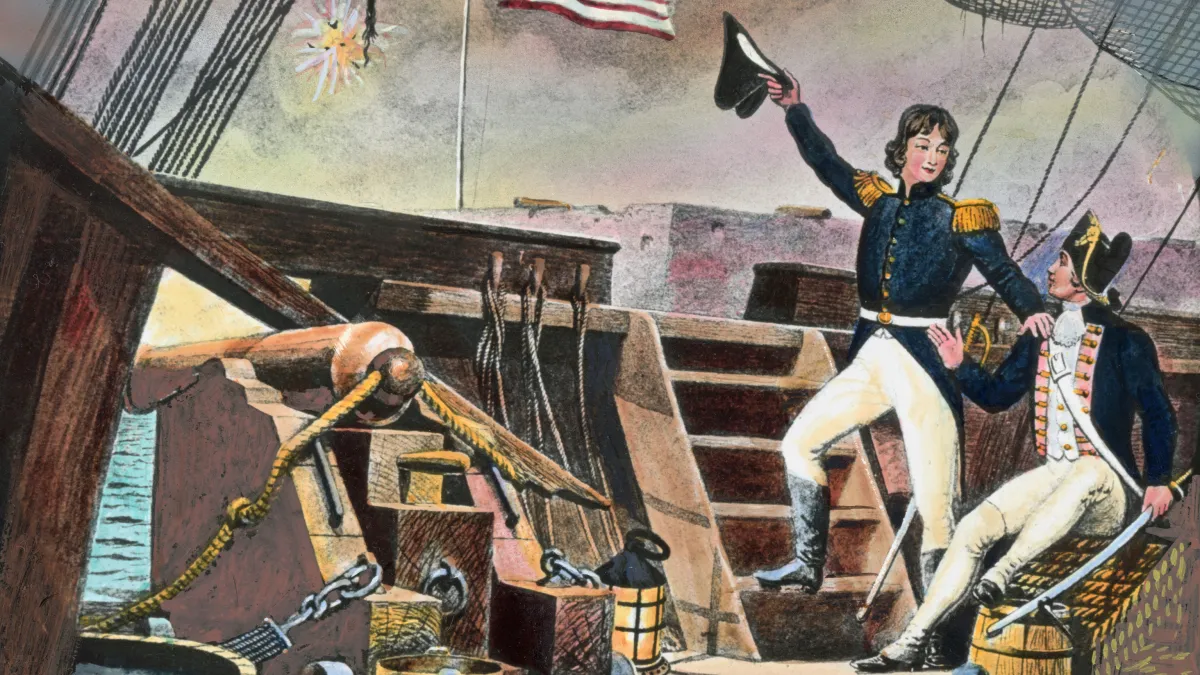 Photo: Francis Scott Key, via cdn.abcotvs.com
The Night at Fort McHenry
In September 1814, Francis Scott Key was aboard a British ship in Baltimore Harbor, negotiating the release of an American prisoner, when the British fleet began bombarding Fort McHenry. He watched through the night and into the morning, and when the American flag was still flying at dawn, he wrote the poem that would eventually become the national anthem.
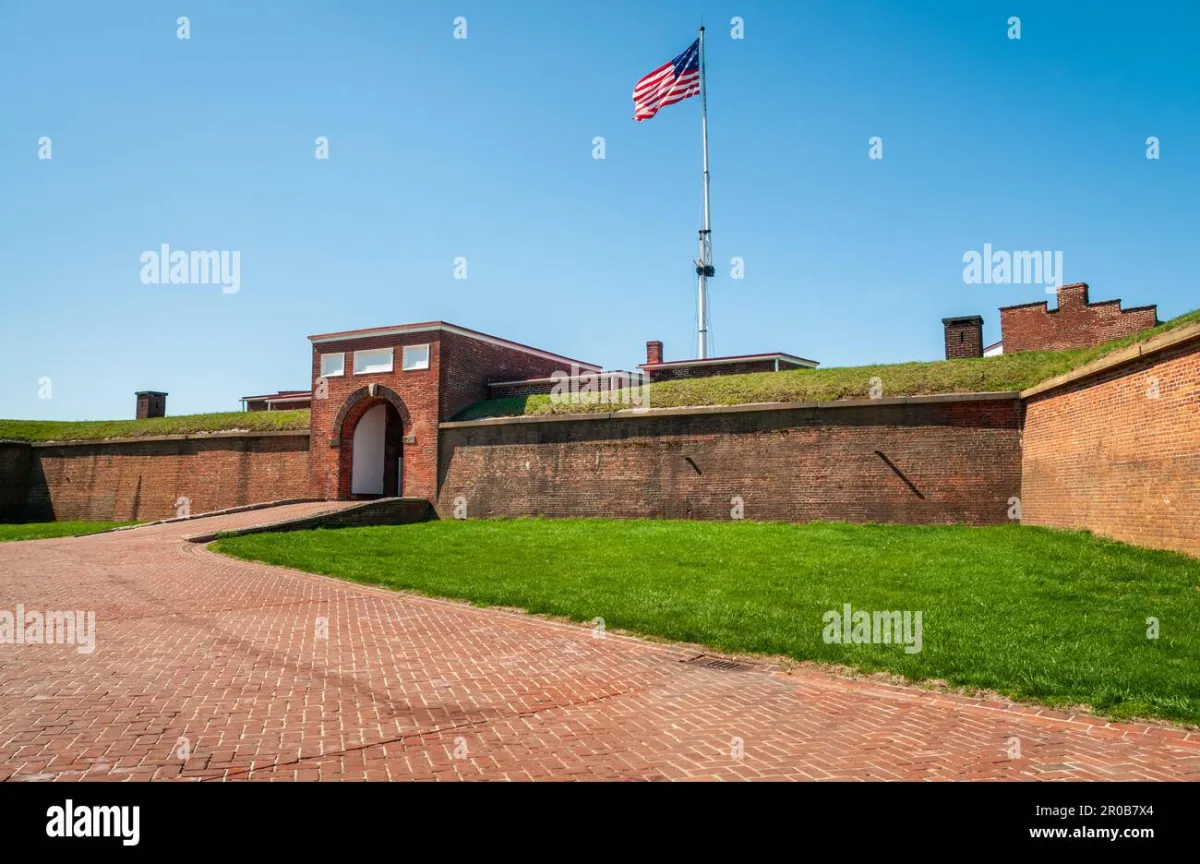 Photo: Fort McHenry, via c8.alamy.com
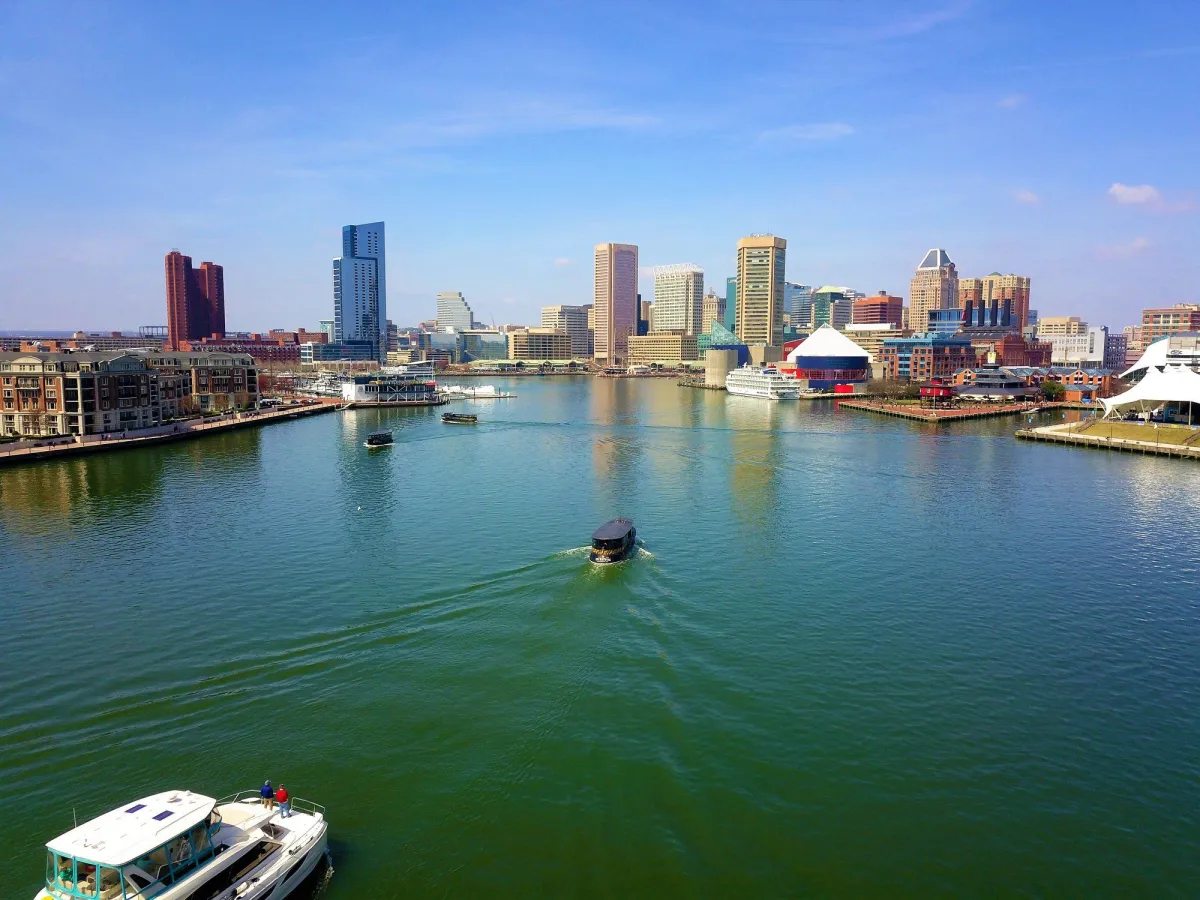 Photo: Baltimore Harbor, via i.pinimg.com
Key didn't compose the music. He borrowed the Anacreontic Society tune because it was familiar, it was popular, and it fit his meter. He almost certainly wasn't thinking about the song's origins in a London drinking club. He was thinking about the flag.
The poem was published almost immediately, set to the existing melody, and became popular — but "popular" in 1814 meant something very different from official. The United States had no national anthem at that point. Nobody had officially designated one. The country had been operating for nearly four decades without a formal musical identity, and nobody seemed particularly bothered by this.
The Century-Long Competition
For the next hundred-plus years, "The Star-Spangled Banner" competed with several other songs for the informal title of America's musical representative. "Hail, Columbia" was the early frontrunner — it had served as a kind of de facto presidential anthem since the Washington administration and was deeply associated with official ceremony. "My Country, 'Tis of Thee" was enormously popular and had the advantage of being significantly easier to sing. "America the Beautiful," written in 1895, developed a passionate following among people who felt that the national anthem should actually describe the country rather than a single battle.
The debate was genuinely contested. Music critics, politicians, and ordinary citizens argued about it for decades. The case against "The Star-Spangled Banner" was straightforward and not without merit: the song was militaristic, it focused on a single moment in a single war, and — this point was made repeatedly and with considerable feeling — almost nobody could actually sing it.
The vocal range required to perform the song correctly spans an octave and a half. The infamous high note requires a sustained pitch that sits comfortably outside the range of most untrained adult voices. Music educators in the early twentieth century published articles arguing, with supporting data, that the song was physiologically unsuitable for group singing. A national anthem, they pointed out, should be something the nation could actually sing together. "The Star-Spangled Banner" was something you attempted alone while hoping nobody was listening too closely.
Congress Finally Makes It Official — Sort Of
In 1931, after decades of competing proposals and several failed congressional attempts, President Herbert Hoover signed the bill making "The Star-Spangled Banner" the official national anthem of the United States. The vote in Congress was not unanimous. Supporters of "America the Beautiful" made one final push and came closer than the history books usually acknowledge.
The timing was, in retrospect, somewhat ironic. The country was in the depths of the Great Depression. The choice to officially adopt a song about a battle from a war that had ended 117 years earlier — set to a tune from a British drinking club — was not universally celebrated. But it was done, and once it was done, the momentum of official designation made the whole thing feel inevitable.
The Accidental Tradition
The modern ritual of performing the national anthem before sporting events is itself a product of accident rather than design. The tradition is generally traced to Game One of the 1918 World Series, when a military band struck up "The Star-Spangled Banner" during the seventh-inning stretch — largely as a morale gesture during World War I — and the crowd's emotional response was so strong that teams began incorporating it into regular practice. By the time the song was officially the national anthem, the sporting event tradition was already deeply embedded.
So the full chain of events looks something like this: a London drinking club needed a flashy opener for their meetings, a poet borrowed their tune to write about a flag, the song spent a century in an unofficial competition it might easily have lost, Congress made it official during an economic catastrophe, and somewhere in the middle of all that, baseball accidentally turned it into a pre-game ritual.
None of it was planned. None of it was inevitable. At a dozen different points, a slightly different decision by a slightly different person would have produced a completely different national anthem — one that most Americans could actually sing.
Instead, every Sunday in September, an entire stadium of people squints up at a performer and silently braces for that high note. The drinking club would have been proud.